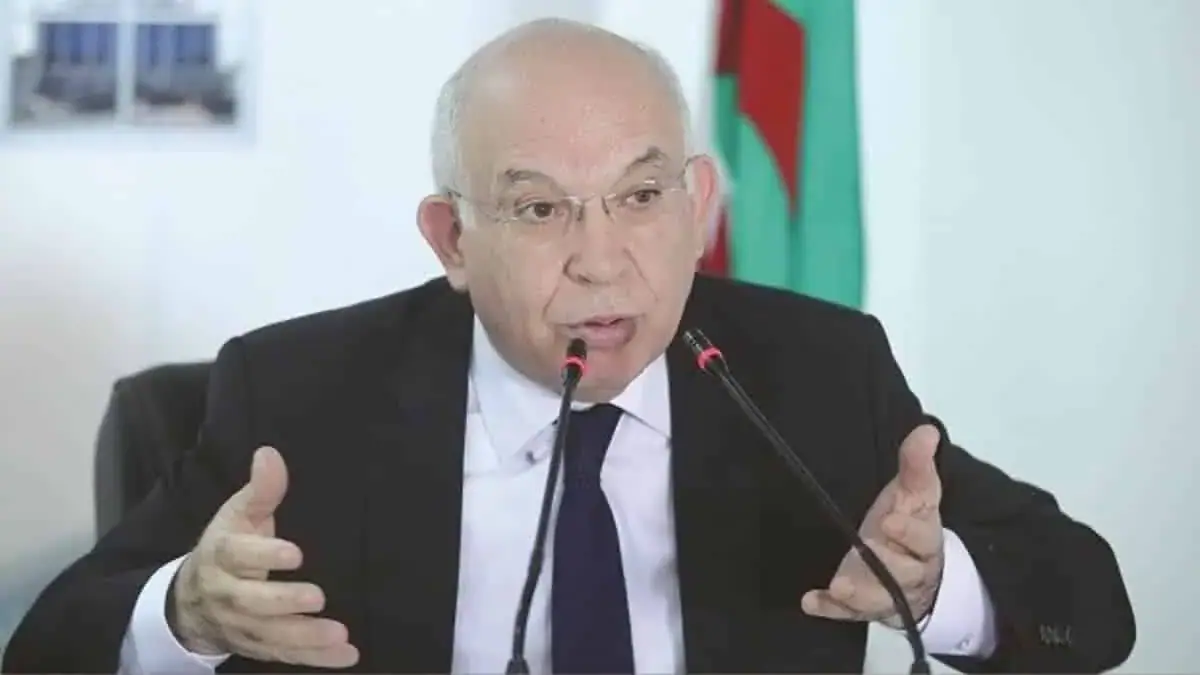
Algerian diplomat and former minister Abdelaziz Rahabi has provided an in-depth analysis of the strategic implications surrounding Russia's veto of a United States-proposed resolution on Western Sahara. The resolution, presented by the US on October 30, was voted on by the UN Security Council. Rahabi emphasized that those who supported Morocco must assume full responsibility for the new situation of the MINURSO mission and will be accountable for any potential disturbances in the occupied Sahrawi territories.
Rahabi stressed that the MINURSO mission cannot be reduced to a simple temporary instance and therefore will not leave Western Sahara nor be expelled from the territory by Morocco, as Morocco does not exercise sovereignty over the territory. He suggested that, in accordance with a recent UN practice, a debate should take place in the General Assembly after Russia's exercise of its veto power. This debate will provide an opportunity for all UN member states to discuss the issue.
Rahabi noted that Russia's veto illustrates its frustration with the persistence of US unilateralism and its attempt to push through a resolution without consensus. This veto marks the first time Russia has voted in favor or against a resolution related to the Western Sahara issue after eight years of abstention. Rahabi argued that Russia's actions demonstrate its strategic vision for the region, which goes beyond the narrow framework of the UN Security Council.
The former Algerian ambassador to Madrid highlighted that the US-proposed resolution aimed to reduce the role of the "pen holder" to a mere privilege devoid of responsibility. Rahabi emphasized that this responsibility requires earning the trust of the opposing party, namely the Polisario Front, as well as that of the two neighboring observer states, Algeria and Mauritania. He also recalled Russia's historical support for anti-colonial struggles in Africa.
Rahabi outlined three key demands from the US-proposed resolution: the autonomy of Morocco as the sole basis for negotiation, the removal of the letter R, and the reclassification of Sahrawis from a people to refugees. He argued that the stakes are highly strategic, with the US and France seeking to transform the UN Security Council into an organ for international legal validation of Western Sahara as an integral part of Morocco.
According to Rahabi, the new military cooperation framework between Algeria and Niger can be seen as a preventive measure against a strategy that poses a direct threat to Algeria's strategic depth and the well-being of its people. He also noted that the strategy involves multiple parties, including Israel, which is defining the future security architecture of the region, and the United Arab Emirates, which is financing the operation.
Rahabi also touched on the role of China and the BRICS countries in the region. He noted that China, which abstained from the vote while recalling the principle of self-determination, remains committed to its line of conduct and does not wish to appear as a superpower lacking a strategic vision in Africa. Rahabi expressed regret that the BRICS countries do not show greater interest in universal values, focusing instead on commercial dimensions.
Key points
- Russia's veto of the US-proposed resolution on Western Sahara reflects its frustration with US unilateralism and its attempt to push through a resolution without consensus.