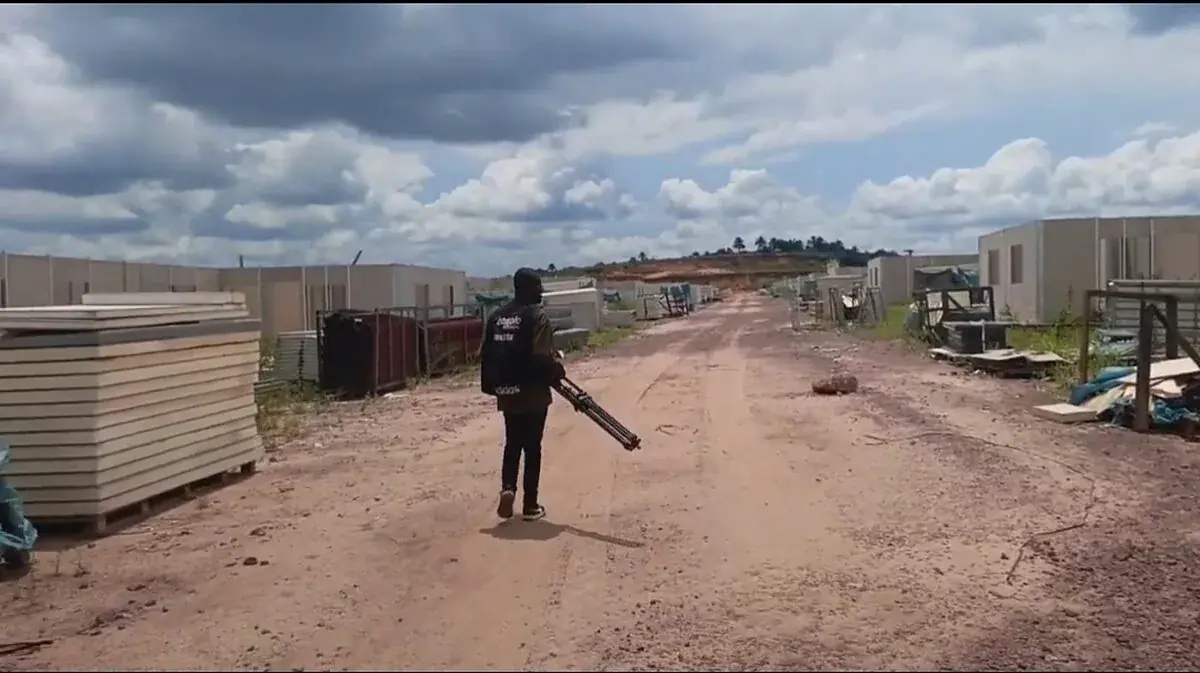
In the Mukilango area of Mont-Ngafula commune, Kinshasa, a site intended for 1,000 social housing units lies abandoned, dashing hopes for flood victims of Matadi-Kibala to find new homes. The project, launched in January 2024 and awarded to Turkish company Milvest, was supposed to be completed within seven months. However, nearly three years after the devastating floods of December 2022, the project remains stalled, with over $43 million already spent by the Congolese government.
The site shows clear signs of a long-abandoned construction project, with scattered materials exposed to the elements. Metal frames, doors, white cement bags, and other supplies are strewn about, damaged by rain and dust. Broken windows and muddy interiors of incomplete houses starkly contrast with the initial ambitions of providing decent living conditions for displaced families. The situation raises concerns about the project's management and the government's commitment to fulfilling its promises.
Security at the site is also a concern, with only three police officers present and private security agents reportedly abandoning their posts due to unpaid wages. This lack of surveillance leaves equipment and materials vulnerable to theft or damage, further jeopardizing the project's revival. For the victims of Matadi-Kibala, who are still awaiting a lasting solution, the project's stagnation revives questions about the use of public funds and the government's ability to deliver on its commitments.
The Congolese government had aimed to provide a dignified living environment for families affected by the floods, but the project's current state suggests otherwise. With over $43 million already invested, the fate of the 1,000 housing units remains uncertain. As the abandoned constructions stand as a testament to unfulfilled promises, displaced persons continue to wait for new homes, and public resources are at risk of being wasted.
Local residents and flood victims express frustration and disappointment at the project's stagnation. Many had pinned their hopes on the government's initiative to provide them with decent housing, but the current situation has left them disillusioned. The project's failure has also sparked concerns about corruption and mismanagement of public funds, further eroding trust in the government's ability to deliver on its promises.
Efforts to revive the project or find alternative solutions for the displaced persons are yet to be seen. The situation in Mukilango serves as a stark reminder of the challenges faced by the Congolese government in addressing the needs of its citizens, particularly in the aftermath of natural disasters. As the project remains stalled, the people of Matadi-Kibala continue to bear the brunt of the disaster, with no end in sight to their plight.
The abandoned housing project in Mukilango has become a symbol of the government's failure to deliver on its promises, leaving thousands of people without access to decent housing. As the situation continues to unfold, it remains to be seen whether the government will find a way to revive the project or provide alternative solutions for the affected communities.
Key points
- Over $43 million has been spent on the abandoned housing project.