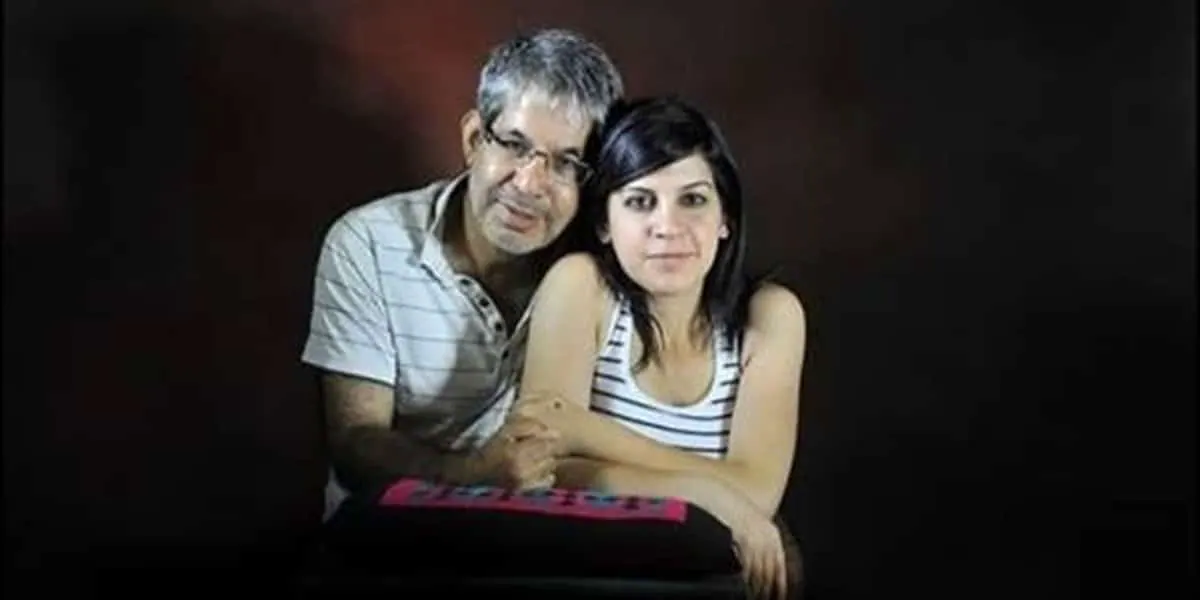
The author recounts a nostalgic walk through the medina of Tunis, revisiting a childhood path often taken with Sadok Ben Mhenni and his daughter Lina, known as Tunisian Girl. The path led to Lina's school, Étoile, located on Rue de la Kasbah. The author reflects on the memories of walking through the Khirba quarter and Jamaa Ghorbal street, noticing that some alleys remain unchanged. The same vendors and shopkeepers are still present, selling traditional goods.
As the author strolls through the medina, he notices the uneven and disjointed cobblestones, which have not changed over time. A particular vendor is still selling cotton reels, which he displays outside his colorful shop. The author's attention is drawn to old, worn-out doors with clouts, which have aged and are not well-maintained. These details evoke memories of Sadok Ben Mhenni holding Lina's hand, a scene that would repeat throughout their lives.
The author's memories of the medina are filled with the presence of friends and loved ones, whom he prefers to recall as vibrant and alive, rather than in the solitude of the Djellaz cemetery. He recalls his uncle Abdeljelil, who frequented the literary salons in the souk of Libraires, where the author would often accompany him. These experiences come flooding back as the author walks through the souks, sensing the essence of bygone eras.
The author's walk continues through the textile market of El Grana, where he finds himself surrounded by a forest of fabrics. He proceeds to the mausoleum of Sidi Mahrez, where he encounters the same devotees, dedicated to preserving the memory of the saint. The author reflects on the lives of those who have dedicated themselves to serving the memory of Sidi Mahrez.
As the author considers continuing his journey to Halfaouine, he decides to head back to the souk of Bijoutiers, located in a labyrinthine network of streets. He knows he will eventually find his friend Daniel Raccah there. The author also recalls Settimo Spina, a master craftsman who owned a small shop on Rue Sidi El Morjani, renowned for his expertise.
The author's thoughts are filled with memories of Lina Ben Mhenni, who has left an indelible mark on Tunisia. He remembers the hundreds of women who accompanied her to her final resting place, a testament to her impact on the country. The author's walk through the medina serves as a poignant reminder of the lives that have shaped his own.
The author's nostalgic journey serves as a tribute to the memories and experiences that have defined his life. As he navigates the medina, he is struck by the realization that certain aspects of life remain unchanged, despite the passage of time. The author's story is a heartfelt reflection on the power of memory and the enduring presence of loved ones.
Key points
- The author recalls his childhood memories with Lina Ben Mhenni and her father Sadok in the medina of Tunis.
- The author's walk through the medina serves as a poignant reminder of the lives that have shaped his own.
- The author's nostalgic journey is a tribute to the memories and experiences that have defined his life.