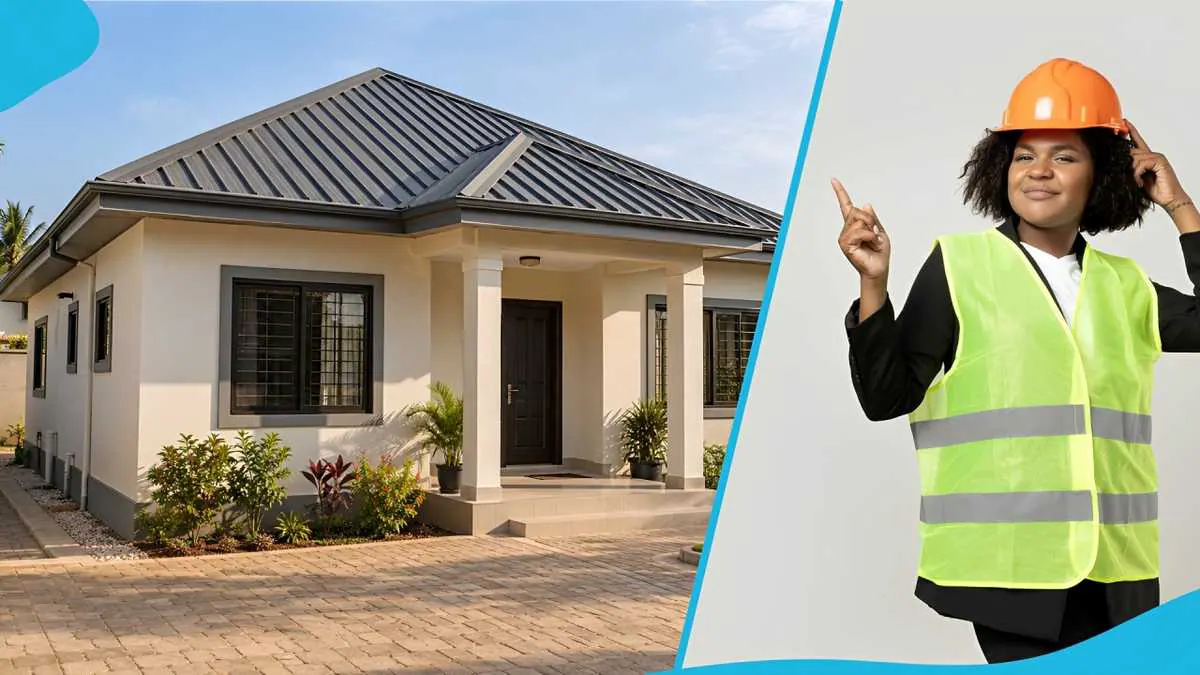
Building a home in Ghana with a monthly salary is a feasible goal, but it demands careful planning and savings. The process begins with assessing one's income, everyday expenses, and the amount that can be saved consistently. A monthly salary can support a building fund, but it does not automatically make every house design affordable. Factors such as the size of the home, location of the land, construction specifications, and existing savings all influence how far the money will go.
To start building a house gradually, salaried workers in Ghana should begin with their take-home salary, subtracting rent, food, transport, dependants' needs, debt repayments, and other essential expenses. They should also make provision for emergencies before deciding how much to contribute to construction. A table illustrating different monthly salaries and savings percentages can help determine how much can be saved. For instance, saving 10%, 20%, or 30% of different monthly salaries can produce varying annual savings.
The savings totals illustrated in the table are not estimates of the cost of completing a house. For example, someone earning GH¢3,000 and saving GH¢600 monthly would put aside GH¢7,200 annually. After essential expenses and that contribution, any remaining money must still cover other commitments. If the contribution proves difficult to sustain, it is advisable to reduce it rather than repeatedly withdrawing from the fund. Keeping construction savings in a separate account and automating contributions where practical can help.
Before choosing a building start date, it is essential to obtain estimates for land, documentation, and the proposed house. Where the projected total greatly exceeds likely savings, consider a smaller design, a different location, or a longer savings period. Budgeting for every building stage, including land and documentation, design and approvals, site preparation and foundation, walls and structural work, roofing and enclosure, plumbing and electrical work, finishing and sanitation, connections and external works, is crucial.
Land should receive careful attention before construction spending begins. Verifying the seller's authority and the property's ownership and documentation, using appropriate professional assistance and official searches, is vital. Checking access, drainage, and whether the proposed development is permitted on the site is also necessary. Contacting the relevant assembly about its building permit requirements and obtaining the required approval before starting work is essential.
Choosing a qualified designer to prepare a house plan suited to your budget is critical. If you intend to extend the property later, include that intention in the original design so foundations, access, and services can be planned appropriately. Asking a quantity surveyor to prepare a bill of quantities, an itemized estimate of the materials and labour required, can guide discussions with your building team.
Saving towards a defined phase, then asking your building professional where work can safely pause, is a practical approach. A monthly contribution does not mean construction must happen every month; accumulating funds first may make a complete stage easier to manage. Updating quotations before each phase and including delivery, water, equipment hire, site security, waste removal, and supervision in the costs is also important.
Key points
- A realistic assessment of income and expenses is crucial to determine how much can be saved consistently for building a house in Ghana.
- Budgeting for every building stage, including land and documentation, design and approvals, site preparation and foundation, walls and structural work, roofing and enclosure, plumbing and electrical work, finishing and sanitation, connections and external works, is essential.
- Saving towards a defined phase and accumulating funds first may make a complete stage easier to manage.