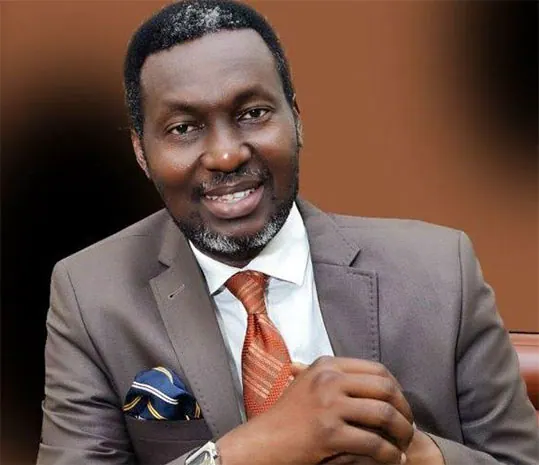
Nigeria's greatest challenge may not be a shortage of resources, ideas, or talented people, but a deeper crisis of purpose. This is the central argument advanced by Pastor Tony Olukoyede, President of Four Streams Academy (4SA). He believes that the country's recurring difficulties cannot be adequately addressed without returning to the foundations of values, vision, purpose, and responsible leadership.
Olukoyede described Nigeria's difficulties as fundamentally structural, compounded by repeated leadership failures. His prescription is not simply geographical or political restructuring, but a foundational restructuring of the Nigerian mindset and value system. He argues that a society must first understand what it values before it can determine where it is going.
At the heart of Olukoyede's philosophy is a deceptively simple proposition: everything that exists has a purpose, and anything that operates outside its purpose eventually becomes dysfunctional. He extends this principle beyond individuals to families, organisations, communities, and nations. Purpose provides direction, while vision becomes the pathway through which purpose is pursued.
A nation without a clear sense of purpose will struggle to develop a shared vision capable of uniting its citizens across ethnic, cultural, and religious differences. Olukoyede believes that values such as honour, respect, hard work, service, responsibility, and regard for others must be deliberately cultivated from childhood. His concern is that Nigeria's definition of success has increasingly become associated with appearances, acquisition, and the pursuit of money rather than the creation of value.
Olukoyede describes purpose and provision as two powerful forces that should work together. People work because they have responsibilities and purposes to fulfil. Through their work, they create value, which generates provision, enabling them to fulfil their responsibilities and purpose. The problem begins when the sequence is reversed, and people pursue money without first establishing the value they intend to create.
For Olukoyede, this is not merely an economic principle but a philosophy of life. The entrepreneur should ask what problem they can solve, the professional should ask what value they can add, and the citizen should ask what contribution they can make to society. The underlying question becomes: "How can I be part of the solution?" This mindset could change not only individual lives but the behaviour of communities and institutions.
Olukoyede illustrates this point with an experience from Johannesburg, where motorists navigated a busy intersection without functioning traffic lights or a traffic warden.
Key points
- Nigeria's challenges stem from a crisis of purpose.
- A nation without a clear sense of purpose will struggle to develop a shared vision.
- Purpose and provision are two powerful forces that should work together.