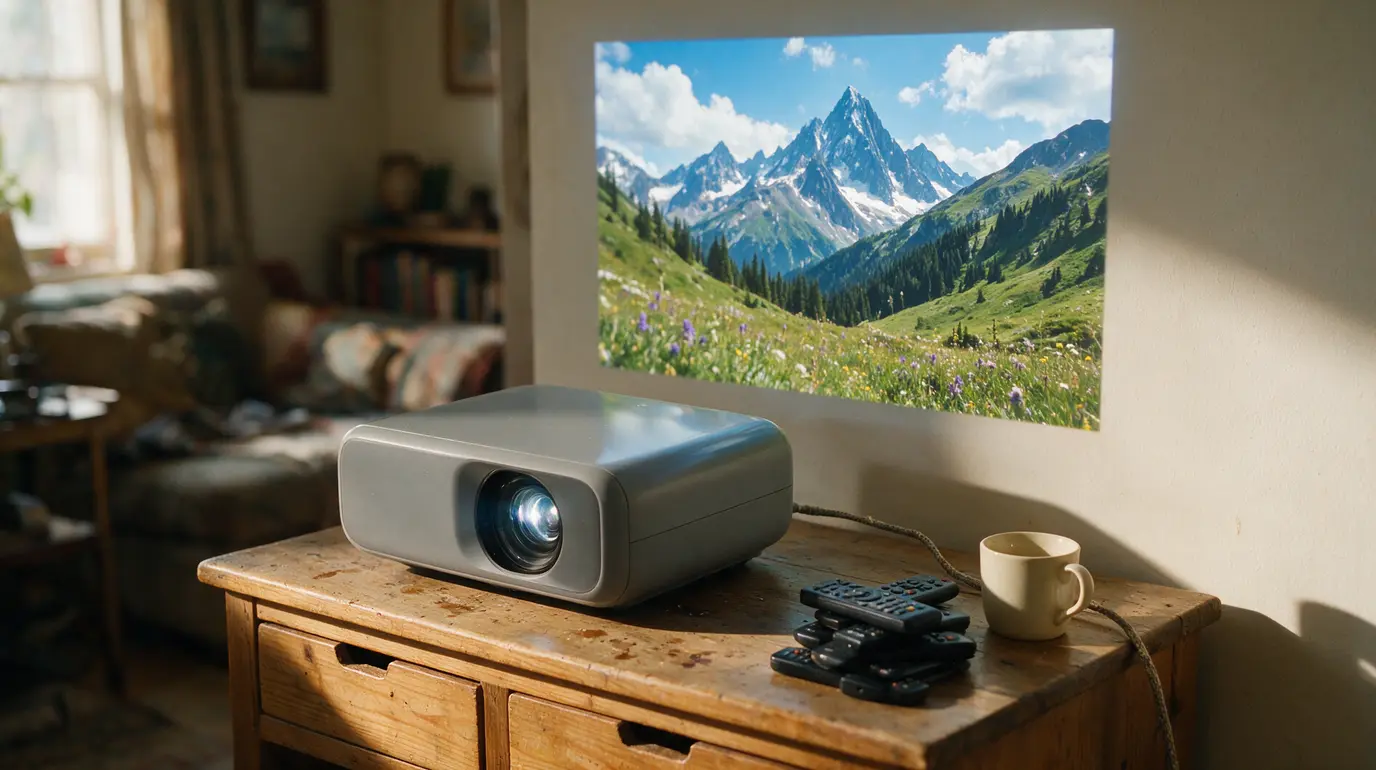
A short-throw projector is a device capable of projecting a large image from a very short distance, typically between 0.5 and 1.5 meters from the screen. This technology is particularly useful in small rooms or environments where space is limited. With a specific short-focus lens, the device enlarges the image without requiring a significant distance between the projector and the projection surface.
The operation of a short-throw projector relies on optics designed to diffuse light at a wide angle. The light beam is refracted to produce a wide and clear image, even when the device is placed very close to the wall. This type of projector often uses modern light sources, such as LED or laser, to offer better brightness and a longer lifespan. In practice, a short-throw projector allows for avoiding cast shadows, reducing clutter, and quickly obtaining a large image diagonal.
Short-throw projectors offer a practical solution for projecting a large image in a reduced space, but they also present certain technical constraints that must be considered before purchase. The main advantages in domestic use include obtaining a wide image without needing distance and avoiding shadows when someone passes in front of the device. Additionally, these models often offer simple installation, ideal for creating a home cinema space even in a small apartment.
Despite their advantages, short-throw projectors require a well-planed projection surface to avoid image distortions. They can also be more sensitive to reflections and sometimes require higher brightness for optimal rendering. Finally, their price is often higher than that of standard-focus models, which can influence the purchasing decision. It is essential to evaluate several technical parameters that directly influence image quality, installation ease, and daily usage.
When selecting a short-throw projector, it is crucial to consider factors such as brightness, expressed in lumens, which must be sufficiently high to offer a clear image even in a moderately lit room. A good contrast ratio improves black depth, while a Full HD or 4K resolution guarantees precise display, indispensable for films and professional presentations. The distance of projection and image size must also be taken into account, as each model has a minimum and maximum projection distance.
The connectivity of the projector must cover the user's needs, including HDMI, USB, Wi-Fi, or Bluetooth for easy connection of sources. Certain features, such as automatic keystone, laser correction, or voice assistants, facilitate installation and improve daily usage experience. Short-throw projectors are ideal for rooms where there are constraints on distance or where installation needs to be simplified.
In conclusion, choosing a short-throw projector is about prioritizing practicality and flexibility. Whether the goal is to maximize space, improve usage comfort, or obtain a large image in a reduced room, this type of projector represents a high-performance and adaptable option for many uses. By considering the essential criteria and understanding the advantages and limitations, users can make an informed decision when selecting a short-throw projector that meets their needs.
Key points
- A short-throw projector is a device that projects a large image from a very short distance, typically between 0.5 and 1.5 meters from the screen.
- The main advantages of short-throw projectors include avoiding cast shadows, reducing clutter, and quickly obtaining a large image diagonal.
- When selecting a short-throw projector, it is essential to consider factors such as brightness, contrast, resolution, distance of projection, and connectivity.