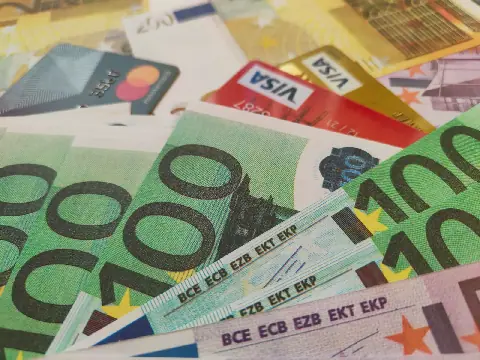
A recent study conducted by the Financial Inclusion Observatory of the Central Bank of Tunisia (BCT) in collaboration with the United Nations Development Programme (UNDP) has revealed that 98% of women in seven governorates still rely on cash for their transactions. The study, which surveyed 2,057 young people and women in Tataouine, Kébili, Médenine, Gabès, Tozeur, Gafsa, and Kairouan, highlights the significant challenges faced by women in accessing financial services in these regions.
The study identified several obstacles that hinder women's access to financial services, including financial dependence on the head of the family, low financial autonomy, lack of trust in the banking sector, and insufficient income. These factors limit women's ability to open bank accounts and gain financial independence. Additionally, many women struggle to understand the terms used by bank agents, which can be complex and inaccessible, deterring them from seeking information or learning about available services.
The study also found that 32% of women surveyed believe that financial institutions do not provide sufficient information about their products, services, and benefits. They prefer awareness campaigns on social media to better understand the offers and learn how to use them. Notably, the Tunisian Post enjoys the highest level of trust among participants, followed by commercial banks and insurance companies.
To address these challenges, the Financial Inclusion Observatory launched a caravan dedicated to financial culture in early October, in partnership with the German International Cooperation Agency (GIZ) and the UNDP. The initiative aims to raise awareness among women in the concerned regions, particularly entrepreneurs and project leaders, about the importance of financial inclusion and available services.
The caravan targets women in the regions, providing them with opportunities to meet with representatives from banks, the Tunisian Post, microfinance institutions, and payment establishments. These interactions enable participants to ask questions, express their needs, and learn about access conditions for financial services. The Observatory aims to develop a communication and awareness strategy tailored to women's needs, facilitating their access to financial services.
The Financial Inclusion Observatory was established by Law No. 35 of 2016, amending the organic law related to the Central Bank of Tunisia. The Observatory is responsible for monitoring and evaluating access to financial services, collecting quantitative and qualitative data, and assessing service quality. In 2018, it conducted a national survey of 1,000 small and medium-sized enterprises and approximately 6,250 households, highlighting a low level of financial literacy.
The Observatory has since multiplied its awareness initiatives in local communities, schools, and universities, as well as during the Global Money Week. It has also developed projects with several partners, including the GIZ, UNDP, French Development Agency, and Cospe, focusing on women's and youth financial inclusion. Additionally, the Observatory is concerned with the challenges faced by people with disabilities, including inaccessible financial institution infrastructure.
Key points
- 98% of women surveyed in 7 Tunisian governorates still use cash for transactions.
- The study identified financial dependence, low autonomy, and lack of trust as key obstacles to women's access to financial services.
- The Financial Inclusion Observatory has launched initiatives to raise awareness and improve access to financial services for women and people with disabilities.