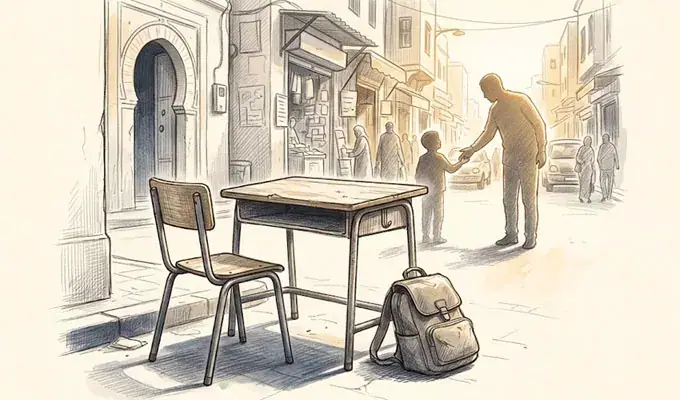
A recent study conducted by Tunisia's National Observatory for Child Rights Protection has shed light on the issue of child begging in the country. The study reveals that 88.8% of respondents view child begging as a form of organized trade. This finding underscores the severity of the issue and the need for a comprehensive approach to address it. The study was presented at a working session held at the Center for Research, Studies, Documentation, and Information on Women.
The study, which surveyed 300 children engaged in begging, 200 citizens, and 100 non-governmental stakeholders in the Greater Tunis area, provides valuable insights into the phenomenon of child begging. According to the results, 98.1% of children involved in begging are not disabled, indicating that physical disability is not a primary cause of this issue. Furthermore, 51.5% of these children have dropped out of school. These findings highlight the need for targeted interventions to address the root causes of child begging.
The study aims to provide scientific and objective data to understand the phenomenon of begging, its causes, and the mechanisms that have contributed to its spread. The Minister of Family, Women, Childhood, and Elderly Affairs, Asma Jebri, emphasized the importance of developing a participatory and multidimensional intervention project to address the issues faced by children and elderly individuals, who are often exploited or instrumentalized in begging practices.
Minister Jebri stressed that combating child begging requires a comprehensive approach that addresses the factors that expose children to begging, protects elderly individuals from marginalization and exploitation, and raises awareness among families, society, and the state about the importance of supporting these vulnerable groups. She also highlighted the need for a collaborative effort involving ministries, public institutions, local authorities, associations, and organizations.
The Minister emphasized that Tunisia has established a comprehensive system for protecting human rights, particularly the rights of children and elderly individuals, based on the preservation of human dignity, social protection, and the fight against all forms of violence, exploitation, and exclusion. She expressed her department's commitment to continuing and adapting its interventions to address emerging forms of vulnerability and exploitation.
The working session provided a platform for representatives of public institutions to propose concrete measures to be integrated into a participatory intervention program aimed at combating child and elderly begging. The program will be developed in light of the study's recommendations. The Minister emphasized the importance of collective awareness and responsible behavior in addressing the issue of begging.
The study's findings and recommendations are expected to inform policy decisions and interventions aimed at addressing the issue of child begging in Tunisia. The government's efforts to combat this phenomenon are crucial in protecting the rights and dignity of vulnerable children and elderly individuals. The study's results highlight the need for a sustained and collaborative approach to address the root causes of child begging and ensure the well-being of those affected.
Key points
- 88.8% of Tunisians view child begging as a form of organized trade.
- 98.1% of children involved in begging are not disabled.
- 51.5% of children engaged in begging have dropped out of school.