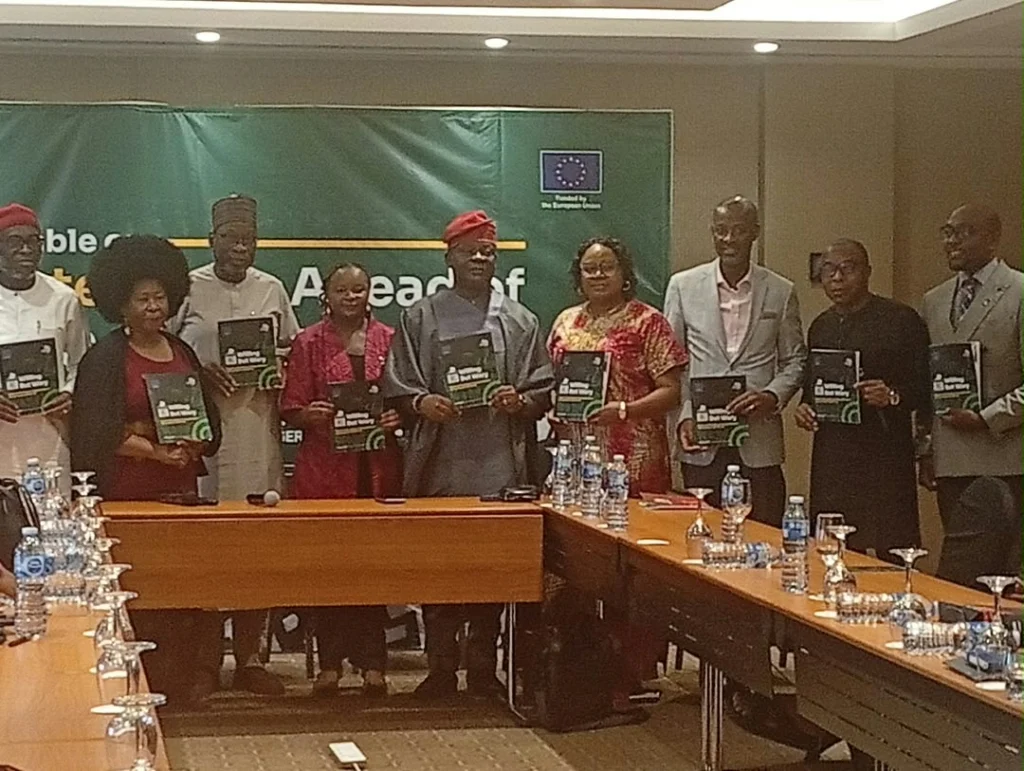
A recent survey by Yiaga Africa has found that 84% of Nigerians intend to vote in the 2027 general elections. The survey, which interviewed 2,470 Nigerians across 36 states and the Federal Capital Territory, also revealed that insecurity, fears of election-related violence, and low confidence in the Independent National Electoral Commission (INEC), judiciary, and security agencies could influence citizens' decisions to vote.
The survey, which is the third National Voting Intentions Survey by Yiaga Africa, aims to examine Nigerians' readiness, motivations, and expectations ahead of the 2027 general elections. According to Hussein Abdul, Chairman of Yiaga Africa Board, the findings are not verdicts, but wake-up calls requiring INEC, security agencies, political parties, civil society organizations, and other stakeholders to address identified concerns.
The survey showed that 61% of respondents feared violence could prevent them from voting, with the figure rising to 78% in the North-East region. Additionally, 83% of respondents wanted improved security. These findings have raised concerns about the potential impact of insecurity on voter turnout in the 2027 elections.
The survey also revealed a decline in trust in INEC, with only 34% of respondents confident of credible elections. Furthermore, 63% of respondents had little or no confidence in the judicial resolution of electoral disputes. These findings suggest that there is a need for INEC and the judiciary to work to regain the trust of Nigerians.
The survey also found that 54% of respondents disapproved of the President's performance, while 71% rated the economy poorly. Additionally, 49% of respondents sought leadership change as a voting motivation. These findings suggest that many Nigerians are dissatisfied with the current state of the country and are looking for change.
Safiya Bichi, Head of Knowledge Management and Learning at Yiaga Africa, said that Nigerians have not given up on democracy, but want their votes to count. She also noted that low turnout in Nigeria is a conversion problem, not an apathy problem, and that the responsibility for fixing it lies with the institutions and actors who control security, credibility, and logistics.
The report has been welcomed by various stakeholders, including civil society organizations and the media. Ene Obi, Executive Director of the Ene Obi Centre for Development, said that Nigeria would get it right and there would be more confidence if citizens vote and guard their votes. Chief Ezenwa Nwagwu, Executive Director of Peering Advocacy and Advancement Center in Africa (PAACA), called on the media to highlight the positive side of the report and for investment in political reforms.
Key points
- 84% of Nigerians intend to vote in the 2027 general elections.
- Insecurity, distrust, and vote buying threaten voter turnout in the 2027 elections.
- Low turnout in Nigeria is a conversion problem, not an apathy problem.