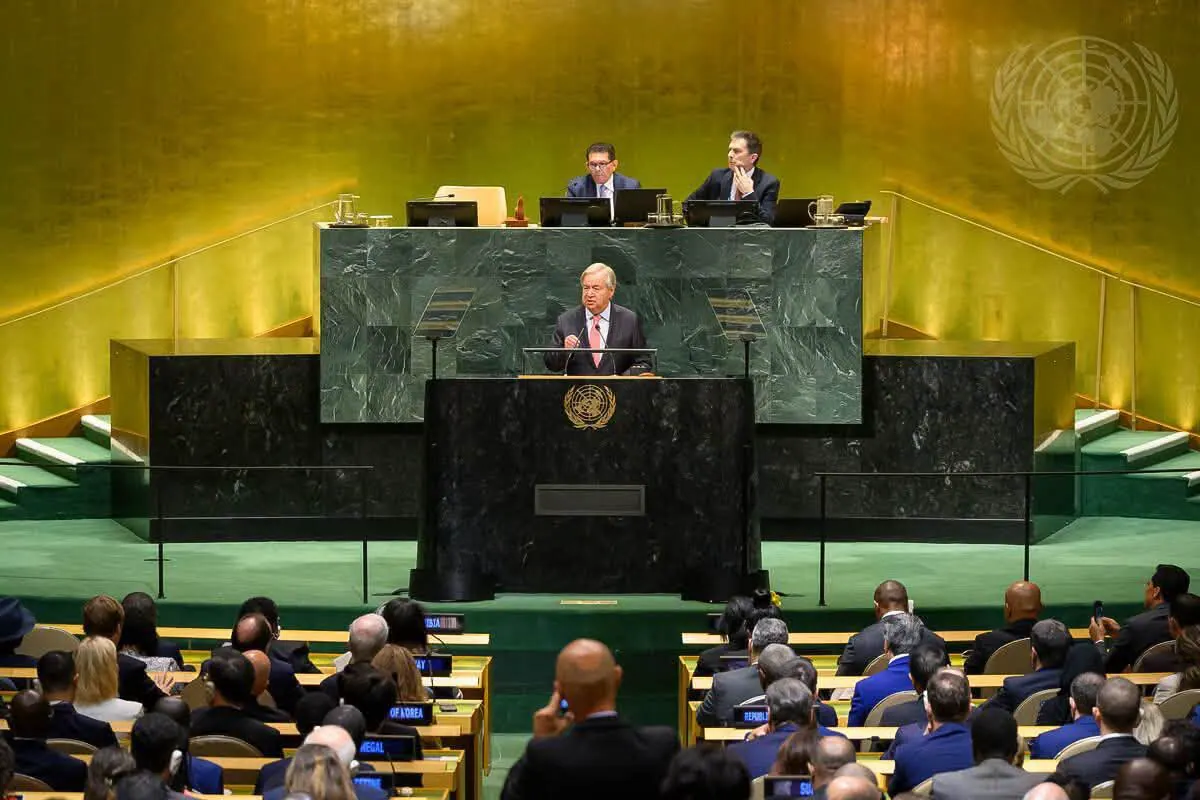
The 81st session of the United Nations General Assembly convened on September 8, bringing together world leaders to promote collective action, peace, and equality. The session's theme, "Restaurer la confiance, gérer la transformation: une Organisation des Nations unies au service de tous," or "Restoring trust, managing transformation: a United Nations in service to all," aims to promote unity and cooperation among nations. However, critics argue that the institution's effectiveness is hindered by power imbalances among its 193 member states.
The UN General Assembly is designed to provide a platform for all nations to have an equal voice, with each member state having one vote. However, in practice, the influence of powerful nations often overshadows that of smaller countries. This session is no exception, with many leaders using their speeches to promote their own interests and agendas. Some notable exceptions include leaders who used their platforms to address pressing global issues, such as poverty, inequality, and conflict.
One notable intervention came from Mamadi Doumbouya, the President of Guinea, who in September 2023 delivered a speech that highlighted the complexities of power and governance. He defined a "putschist" not only as someone who takes power by force but also as those who manipulate constitutional texts to maintain power. While his comments sparked controversy, they also underscored the need for nuanced discussions about democracy, power, and governance.
Another notable speech was delivered by the Iranian President, who emphasized the importance of dignity, sovereignty, and the suffering of his people. His comments were seen as a refreshing change from the usual diplomatic rhetoric, highlighting the need for leaders to speak with conviction and coherence. The Iranian President's speech was notable for its emphasis on the human cost of conflict and the need for nations to prioritize the well-being of their citizens.
Despite these notable interventions, many critics argue that the UN General Assembly has failed to live up to its potential. The institution has long been criticized for its perceived bias and inconsistency in applying its principles and condemnations. The UN's inability to prevent the law of the jungle from prevailing has led to widespread disillusionment with the institution. Critics argue that the UN's effectiveness is hindered by its inability to hold powerful nations accountable for their actions.
The UN General Assembly's session has also highlighted the challenges of achieving collective action in a world marked by conflict, inequality, and division. The institution's ability to promote peace and cooperation is often hindered by the competing interests of its member states. Despite these challenges, the UN remains a crucial platform for international diplomacy and cooperation, and its sessions provide a unique opportunity for world leaders to come together and address pressing global issues.
As the 81st UN General Assembly session comes to a close, many are left wondering whether the institution can truly deliver on its promises. While the session has highlighted the complexities and challenges of international diplomacy, it has also underscored the need for collective action and cooperation to address the world's most pressing challenges. The UN's effectiveness will depend on its ability to adapt to changing global circumstances and to promote a more just and equitable world order.
Key points
- The 81st UN General Assembly session highlighted the challenges of achieving collective action in a world marked by conflict, inequality, and division.
- Critics argue that the UN's effectiveness is hindered by power imbalances among its member states and its perceived bias and inconsistency in applying its principles and condemnations.
- Despite these challenges, the UN remains a crucial platform for international diplomacy and cooperation, and its sessions provide a unique opportunity for world leaders to come together and address pressing global issues.