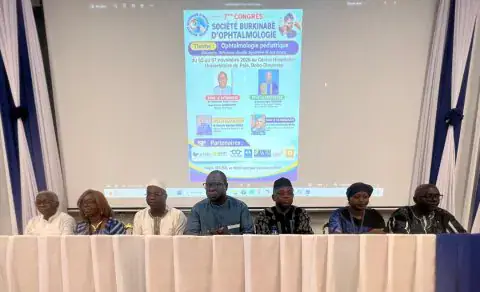
The 7th congress of the Burkinabé Society of Ophthalmology (SBO) kicked off in Bobo-Dioulasso on November 5, 2026, and will run until November 7. The event, held at the University Hospital Center (CHU) of Pala, brings together experts, researchers, and healthcare professionals from Burkina Faso, Africa, and Europe. They will discuss major public health issues, with a central theme of "Pediatric Ophthalmology, Glaucoma, Visual Impairment, and Screen-Related Syndrome."
The congress prioritizes pediatric ophthalmology due to Burkina Faso's demographic reality, with children making up 52% of the population, approximately 12.5 million individuals under the age of 14. According to SBO President Pr Jean Wenceslas Diallo, preserving children's vision is an absolute urgency. The development of a child's vision plays a crucial role in their overall growth, impacting their learning, autonomy, and social integration. Untreated visual impairments can severely compromise a child's educational path and future.
The specialists emphasize that a child with blindness represents an irreversible loss for their family and the nation. Therefore, it is essential to address underlying conditions beyond common pathologies like conjunctivitis. The congress also tackles chronic conditions such as glaucoma and visual impairment. A new aspect of the event focuses on the impact of digital transformation on eye health, specifically screen-related syndrome. Prolonged and uncontrolled screen exposure poses an emerging health risk, particularly for children and adolescents.
Experts warn that excessive screen use can lead to early onset myopia and other visual disorders. They recommend reasonable use of digital tools, increased family awareness, and systematic ophthalmological exams when signs of excessive exposure appear. The three-day congress features conferences, roundtable discussions, research presentations, and practical training workshops. These sessions aim to enhance the surgical skills of young doctors and promote experience sharing with technical partners and laboratories.
The congress highlights the challenges faced by the eye health sector in Burkina Faso, including a shortage of specialized human resources and inadequate medical equipment. In response, government representatives and association leaders have welcomed initiatives to increase the number of specialists and modernize hospital facilities. The representative of the Minister of Health reiterated the government's commitment to promoting equitable access to quality eye care for all populations.
The representative emphasized the need for coordinated efforts from healthcare professionals, teachers, local authorities, associations, and families to detect eye problems early, particularly in schools. The stakeholders expressed their hope that the congress recommendations will lead to concrete actions to strengthen the Burkinabé eye health system sustainably. The event concluded with a call to action for the mobilization of all stakeholders in favor of vulnerable populations and children.
Key discussions at the congress include the need for early detection and treatment of eye problems in children, the risks associated with excessive screen time, and the importance of collaboration between healthcare professionals and other stakeholders to address these challenges.
Key points
- The congress highlights the need for increased awareness and action on eye health issues affecting children in Burkina Faso.
- The event brings together experts and stakeholders to discuss and address major public health issues related to eye health.
- The recommendations from the congress aim to strengthen the Burkinabé eye health system and promote equitable access to quality eye care.