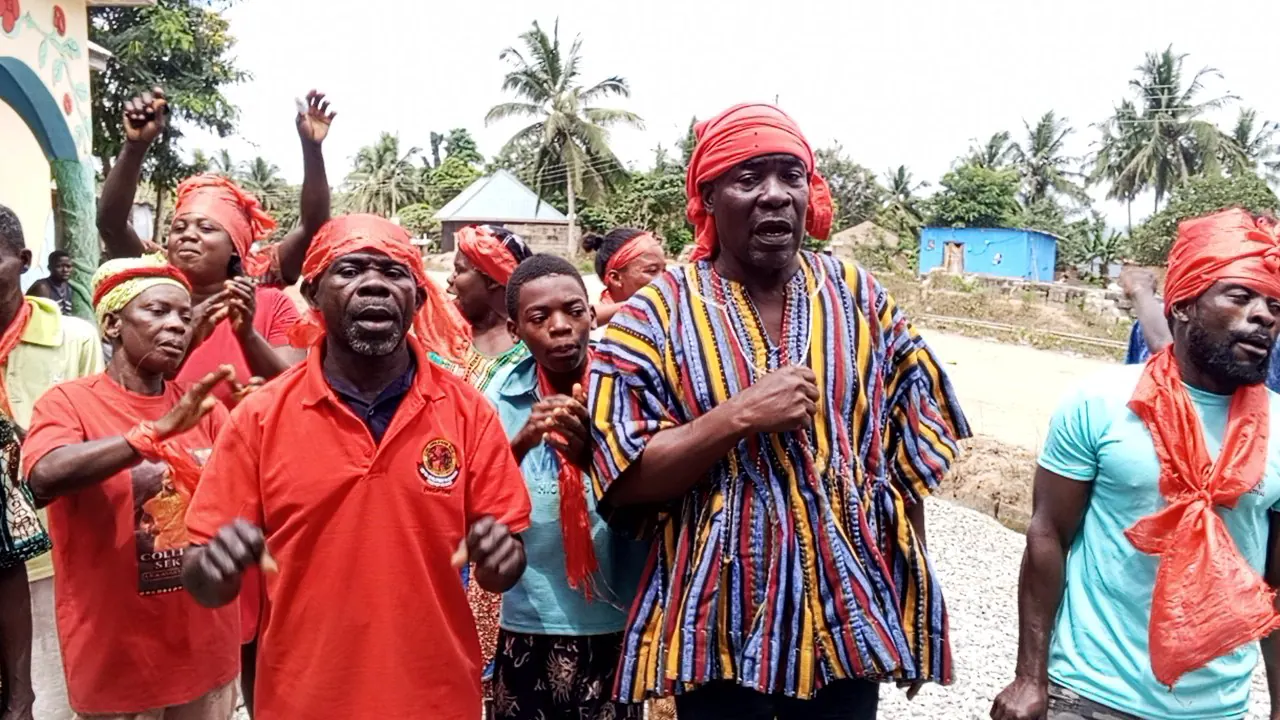
A recent incident in Agona Kwesi Twikrom, a community in the Agona East District of Ghana's Central Region, has left over 700 farmers without their primary source of income. Armed land guards in military uniform stood watch as bulldozers cleared 250 acres of land, destroying various crops including cocoa, coconut, orange, palm, cassava, maize, garden egg, and pepper. The land is being prepared for a pineapple plantation by an investor.
The destruction has caused significant financial hardship for the affected farmers, who relied on the land for their livelihoods. According to reports, two family members, Yaw Nkum and Yaw Fosu, sold the land to the investor without obtaining the consent of the wider family. The farmers claim that Nkum and Fosu informed them that the investor would not provide compensation, referring to their crops as "mere flowers" to the investor's eyes.
The incident has sparked outrage in the community, with farmers expressing their anger and frustration. Albert Quainoo, the former Assemblyman for the Agona Kwesi Twikrom/Fawomanye Electoral Area, addressed a press conference on behalf of the affected farmers. He stated that the destruction had plunged the community into shock and mentioned the case of an 82-year-old woman, Efua Yamoawaa, who died after learning that her coconut plantation had been bulldozed.
The community had reportedly sent an emergency report to the Agona Swedru Divisional CID office of the Ghana Police Service, but no action was taken. Quainoo alleged that CID officers prevented the farmers and family elders from intervening to prevent the destruction. The incident highlights the recurring problem of customary family land being sold by individual relatives without the consent of the wider family, often leaving smallholder farmers with no legal protection.
The affected farmers, including widows Ekua Sekyi and Efua Kyerewaa, have described their losses and appealed for government intervention. Sekyi, an 85-year-old widow, stated that she had raised her children through farming after losing her husband 50 years ago and now faces financial difficulties. Kyerewaa, whose five-acre palm plantation was destroyed, warned that without government intervention, she and her children risk going hungry.
The use of "land guards" – private, often armed enforcers hired to seize or protect disputed land – has been a persistent source of violence in land conflicts across Ghana. The case illustrates the challenges faced by smallholder farmers in Ghana, where much land is held under customary tenure, managed collectively by families or stools rather than registered to individual owners.
The farmers, through their spokesperson, have appealed to the Minister of Interior, the Inspector-General of Police, and relevant agencies under the Ministry of Food and Agriculture to investigate the matter and ensure compensation is paid. The outcome of these appeals and any potential investigation or action remains to be seen.
Key points
- Over 700 farmers in Ghana's Agona East District have lost their livelihoods due to the destruction of 250 acres of crops by land guards and bulldozers.
- The land was allegedly sold by family members without the consent of the wider family, highlighting the challenges of customary land tenure in Ghana.
- The incident has sparked outrage, with farmers appealing to the government for intervention and compensation.