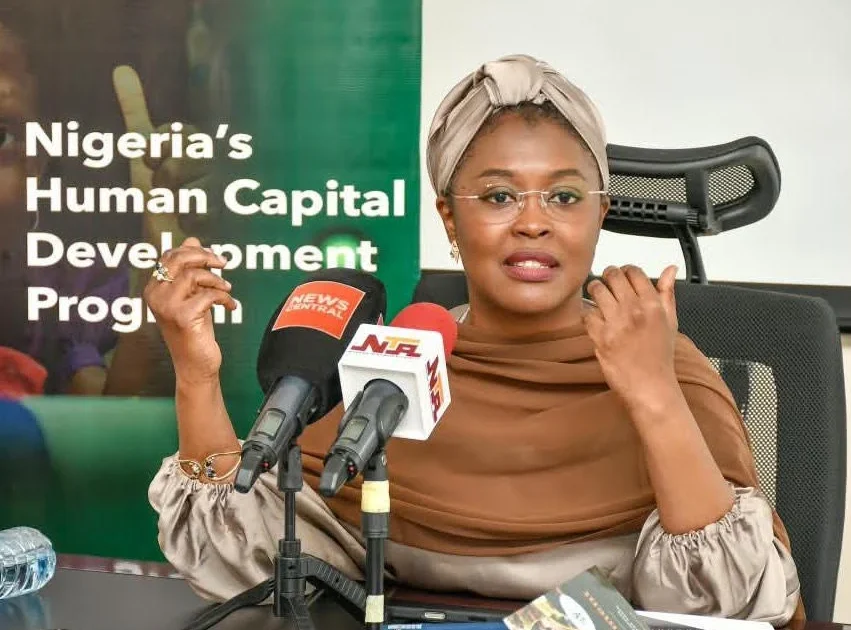
A recent report by the National Human Capital Development Programme has highlighted a concerning trend in Nigeria's education sector. Approximately 70% of Nigerian children under the age of 10 are unable to read and understand simple sentences. This statistic underscores the country's growing learning crisis and raises questions about its ability to develop a productive workforce. The issue was disclosed by Rukaiya el-Rufai, National Coordinator of Human Capital Development 2.0 and Special Adviser to the President of the National Economic Council and Climate Change.
The learning crisis in Nigeria is particularly alarming because mere physical presence in school does not guarantee that children are acquiring essential literacy and numeracy skills. According to el-Rufai, being in school does not necessarily translate to learning. The World Bank estimates that by the ages of 10 to 12, about 85% of Nigerian children lack sufficient numeracy and English skills. This shortfall has significant implications for the country's economic development and its ability to provide young people with the skills required to secure productive employment.
The issue extends beyond the education sector, as the quality of learning directly affects the ability of young Nigerians to acquire advanced skills required by industries. el-Rufai cited the example of the Dangote Refinery, which faced challenges training Nigerian welders due to their lack of basic geometry skills. This deficiency hindered the refinery's operations, illustrating the far-reaching consequences of inadequate education. The problem is multifaceted, and addressing it will require a comprehensive approach that involves various sectors.
The Human Capital Development 2.0 programme has been launched to address these challenges, focusing on health, education, skills, and livelihoods. The programme aims to improve Nigeria's performance on human capital indicators by tracking measurable outcomes. Six priority indicators have been identified, including under-five mortality, stunting, immunization, out-of-school children, learning poverty, and youth not in employment, education, or training. By monitoring these indicators, the programme seeks to determine where interventions and resources are most urgently needed.
The programme has adopted a new approach that involves regional sessions with states, recognizing that human capital challenges vary significantly across different parts of the country. This approach acknowledges that a one-size-fits-all solution is inadequate and allows states to develop their own human capital development plans tailored to their unique needs. By doing so, states can address their specific developmental challenges and prioritize areas where they need improvement.
The programme also emphasizes the importance of data-driven decision-making. By using data to identify areas of need, the programme can target interventions and resources more effectively. This approach is crucial in ensuring that efforts to address human capital challenges are informed by evidence and likely to yield positive outcomes. Furthermore, the programme has the support of development and private-sector partners, including the Bill & Melinda Gates Foundation and the Aliko Dangote Foundation.
Investment in human capital is critical to Nigeria's economic development, and the media plays a vital role in tracking progress and holding governments accountable for human capital spending. The Director of Advocacy and Communications at the programme, Ms Doosuur Zasha, urged the media to continue to play a stronger role in promoting transparency and accountability. By working together, stakeholders can help ensure that Nigerians have access to quality healthcare, education, and skills development opportunities, ultimately contributing to the country's economic growth and development.
Key points
- 70% of Nigerian children under 10 cannot read simple sentences.
- The Human Capital Development 2.0 programme is focusing on health, education, skills, and livelihoods to improve Nigeria's human capital indicators.
- The programme is using a data-driven approach to target interventions and resources.