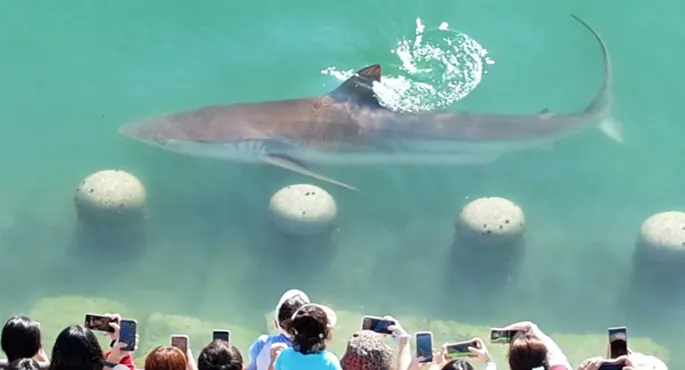
A massive shark, measuring 3.5 meters in length, has become a surprise tourist attraction in Busan, a coastal city in South Korea. The shark, believed to be a bronze shark, has been stuck in a narrow waterway since September 18. Authorities have been working to return the shark to the open sea, but efforts have been hindered by concerns for its safety and well-being. The shark's predicament has drawn large crowds, with over 600,000 visitors flocking to a nearby park to catch a glimpse of the stranded animal.
The shark, nicknamed "Bokangi" after the city's northern port, has been the subject of a rescue effort by the Busan coast guard. Initial attempts to free the shark were made on September 18, but were abandoned after six hours due to concerns that forcing it to leave could cause harm or make it aggressive. Since then, authorities have been working to safely relocate the shark, using tactics such as spraying water behind it to encourage it to swim towards the sea.
Despite these efforts, the shark has remained stuck in the waterway, and its condition is being closely monitored by the National Institute of Marine Fisheries. While the institute reports that the shark's condition is stable, officials have expressed concerns that its ability to feed and move is limited, which could weaken it over time. The rescue effort was temporarily halted on September 29 due to the shark's refusal to leave the waterway.
The shark's unexpected popularity has led the Busan city government to declare it an "honorary media ambassador," with over 91% of respondents to a social media poll supporting the idea. The city's mascot, "Bogi," is set to receive a certificate on behalf of the shark. The incident has also highlighted the increasing presence of sharks in Korean waters, with 46 large sharks spotted off the eastern coast in the first half of the year, four times the number recorded the previous year.
According to the National Institute of Marine Fisheries, the increase in shark sightings is likely due to rising sea temperatures and an increase in the fish that sharks prey on. While the shark's fate remains uncertain, it continues to draw large crowds, with the city's northern port park recording 607,000 visitors between September 19 and 28.
The Busan city government has been working to balance the public's interest in the shark with concerns for its safety and well-being. While some have expressed concerns that the shark's popularity could lead to it being harmed or exploited, others have praised the city's efforts to raise awareness about the importance of marine conservation.
As the rescue effort continues, the shark remains a major tourist attraction in Busan, with thousands of visitors flocking to see it every day. The incident has also sparked a wider conversation about the importance of protecting marine life and the challenges of balancing human interests with conservation efforts.
Key points
- The shark, believed to be a bronze shark, has been stuck in a narrow waterway in Busan since September 18.
- Over 600,000 visitors have flocked to a nearby park to see the stranded shark.
- The incident has highlighted the increasing presence of sharks in Korean waters, with 46 large sharks spotted off the eastern coast in the first half of the year.