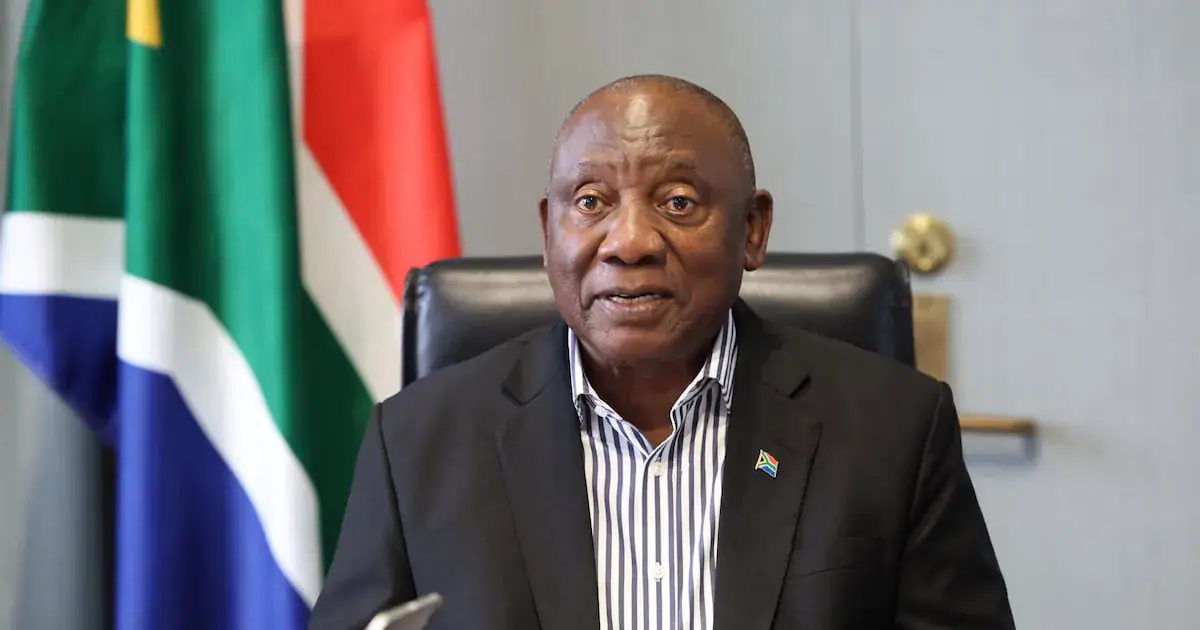
President Cyril Ramaphosa has announced that 60% of the 30 reform programmes under the second phase of Operation Vulindlela are complete or on track. This progress was revealed in response to questions in the National Council of Provinces on Tuesday. The reforms aim to unlock investment, create jobs, and boost economic growth. Ramaphosa highlighted that a further 30% of the reforms are underway and progressing well, while the remaining 10% require targeted attention.
Significant progress has been made in the energy sector. South Africa has gone more than 550 days without load-shedding, a notable improvement in the country's power supply stability. Eskom's planned performance has improved by about 15% since 2022. The power utility has also recorded two consecutive years of profit. These developments are crucial for economic growth and investor confidence.
The energy sector continues to see new developments. A ministerial determination issued in October has opened the way for 4,600MW of battery storage and 5,000MW of gas-fired power generation. This move is expected to enhance the country's energy mix and reduce reliance on traditional power sources. The reforms in the energy sector are part of a broader effort to address the country's power challenges.
In the logistics sector, the decline in Transnet's performance has been arrested, and trade volumes are recovering. The cabinet has approved the approach to establishing an independent, state-owned national rail authority. The first private train operators are expected to begin running on the country's rail network in 2027. This development is expected to improve the efficiency and competitiveness of South Africa's logistics sector.
Electricity market reforms are also underway. Ramaphosa approved the first report on Eskom's restructuring in August, with a detailed implementation plan being developed to stabilise the utility's financial position. The plan will advance a competitive wholesale electricity market. Trading rules and the market code are expected to be finalised in the coming months. These reforms aim to create a more efficient and sustainable electricity market.
The government is also pursuing local government reforms. The recently launched White Paper on Local Government proposes that water and electricity providers be licensed. Revenue from services would be ring-fenced and reinvested in infrastructure. Municipalities that fail to meet licensing conditions could have alternative providers appointed. These reforms aim to improve the delivery of basic services to citizens.
Ramaphosa also addressed trade relations with the US, which will be impacted by South Africa's exclusion from the African Growth and Opportunity Act (Agoa) from January 1, 2027. The government is working with business and labour to limit the impact of this exclusion. Negotiations with Washington are continuing, and the government is exploring alternative export markets, including China's offer of tariff-free access for products from across the African continent.
Key points
- 60% of Vulindlela reforms are complete or on track.
- South Africa has gone more than 550 days without load-shedding.
- The government is working to limit the impact of exclusion from Agoa.
Reporting sources
- The Rand Daily Mail · The Rand Daily Mail