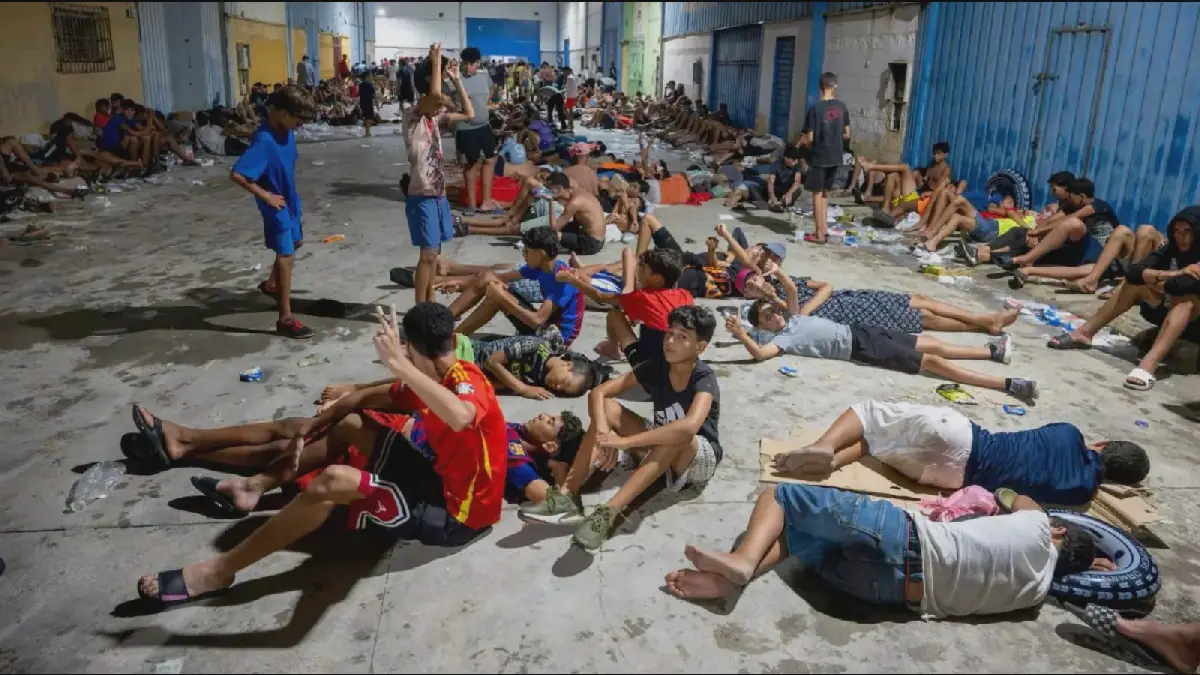
In a recent development, 54 unaccompanied minors from Ceuta, a Spanish enclave in Morocco, have been allowed to join their families in mainland Spain. The move comes after the minors arrived in Ceuta on July 31, and were subsequently taken under the care of local authorities. According to reports, the minors were able to reunite with their families, primarily parents or grandparents, who reside in mainland Spain.
The reunification process was facilitated by the Spanish authorities, who have been working to process the cases of hundreds of unaccompanied minors who have arrived in Ceuta in recent weeks. The minors were initially taken into care by local authorities in Ceuta, who are responsible for their well-being under Spanish law. The recent reunifications are part of a broader effort to process the cases of unaccompanied minors who have arrived in Ceuta.
According to sources, a further 300 minors are currently being processed by the relevant authorities in Ceuta, with many of them having family members in mainland Spain. The Spanish government has indicated that it will prioritize family reunification for these minors, with the aim of reuniting them with their loved ones as quickly as possible. This move is seen as a key step in addressing the humanitarian crisis that has unfolded in Ceuta.
The issue of unaccompanied minors in Ceuta has been a subject of concern for the Spanish government, with the country's Minister for Youth and Childhood, Sira Rego, commenting on the situation recently. Rego emphasized the importance of family reunification, stating that it is a priority for the government to ensure that minors are able to join their families as quickly as possible. The minister also highlighted the complexities of the situation.
The recent surge in arrivals of unaccompanied minors in Ceuta has put significant pressure on local authorities, who are working to provide care and support to the youngsters. According to reports, there are currently over 2,300 unaccompanied minors in Ceuta, with many of them requiring urgent care and support. The situation has been exacerbated by the recent influx of migrants and asylum seekers.
The Spanish government has been working to address the humanitarian crisis in Ceuta, with a focus on providing support to unaccompanied minors and other vulnerable groups. The government has also emphasized the need for a coordinated response to the crisis, involving both national and international authorities. The situation in Ceuta remains a key challenge for the Spanish government.
The reunification of the 54 minors with their families in mainland Spain is seen as a positive step in addressing the humanitarian crisis in Ceuta. However, the situation remains complex, with many challenges still to be addressed. The Spanish government will continue to work to provide support to unaccompanied minors and other vulnerable groups in Ceuta.
Key points
- 54 unaccompanied minors from Ceuta have been reunited with their families in mainland Spain.
- A further 300 minors are currently being processed by the relevant authorities in Ceuta.
- The Spanish government has prioritized family reunification for unaccompanied minors who have arrived in Ceuta.