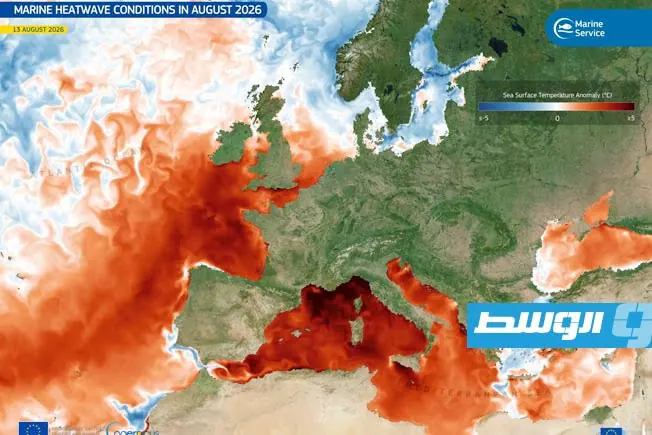
According to the European Union's climate observatory, Copernicus, 52% of Europe's population faced severe heat stress during the summer of 2026. This was due to a series of heatwaves that started early in the spring and continued throughout the summer, causing record-breaking temperatures and thousands of deaths. The heat stress was particularly severe in Western Europe, where several countries recorded their highest temperatures ever.
The summer of 2026 was the third hottest on record in Europe, with Western Europe experiencing its hottest summer ever. Four of the ten strongest heatwaves in Europe occurred in the summer of 2026 alone. The heat stress was exacerbated by climate change, which has caused Europe to warm at a faster rate than any other continent. Samanta Burgess, head of climate at the European Centre for Medium-Range Weather Forecasts (ECMWF), said that the summer of 2026 was notable not only for its severity but also for its geographical scope.
The heatwaves during the summer of 2026 led to an estimated 8,000 deaths in France alone. The heat stress was severe enough to cause 80% of Europe's population to experience "strong" heat stress, with temperatures reaching 32°C or higher for 41 days at the end of the season. The heat stress was particularly severe in urban areas, where the urban heat island effect exacerbated the temperatures.
Heat stress occurs when the body's natural cooling systems are overwhelmed, causing symptoms ranging from dizziness and headaches to organ failure and death. The Copernicus climate observatory uses satellite data and computer modeling to track heat stress and other climate-related phenomena. The observatory's data is used by policymakers and emergency responders to mitigate the effects of heatwaves.
The summer of 2026 was not only hot but also saw a number of other extreme weather events, including heavy rainfall and flooding in some parts of Europe. The extreme weather events were caused by a combination of climate change and natural climate variability. The Copernicus climate observatory provides critical data and insights to help policymakers and emergency responders prepare for and respond to extreme weather events.
The European Union has set a goal to reduce greenhouse gas emissions to net-zero by 2050, in an effort to mitigate the effects of climate change. The Copernicus climate observatory is a key tool in this effort, providing critical data and insights on climate change and its impacts. The observatory's data is used by policymakers, researchers, and emergency responders to develop and implement effective climate change mitigation and adaptation strategies.
The summer of 2026 was a wake-up call for Europe, highlighting the need for urgent action to address climate change. The Copernicus climate observatory will continue to provide critical data and insights on climate change and its impacts, helping policymakers and emergency responders to prepare for and respond to extreme weather events.
Key points
- 52% of Europe's population faced severe heat stress during the summer of 2026.
- The summer of 2026 was the third hottest on record in Europe.
- Climate change has caused Europe to warm at a faster rate than any other continent.