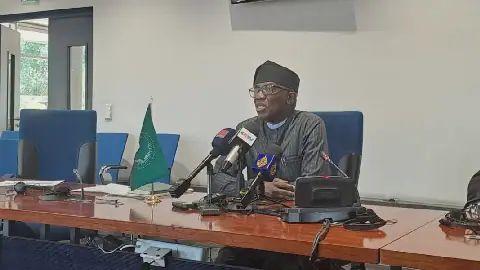
The Director-General of National Education, Literacy, and Language Promotion, Alhassane Ibounou, launched a 12-day training workshop for 440 teachers in Tahoua, Niger, on October 30, 2026. The training is part of the Niger-LIRE project, funded by the World Bank's International Development Association (IDA) and implemented by the Ministry of National Education, Literacy, and Language Promotion.
The training targets teachers who will work in 300 new and 144 existing centers of the Dispositif d'Éducation Accélérée Harmonisée (DEAH) in the Tahoua region. The program aims to provide a second chance to young people aged 9-16 who have been excluded from the formal education system. DEAH centers offer intensive learning opportunities, enabling beneficiaries to either reintegrate into the formal school system or pursue vocational training.
The Niger-LIRE project focuses on improving learning outcomes for all children, particularly those with critical learning deficits. The project has two main components, with the second component focusing on promoting second-chance programs for out-of-school and early-dropout children. The DEAH program is a key part of this component, aiming to provide alternative education pathways for disadvantaged youth.
The training workshop was attended by Illyassou Sahirou, Coordinator of the Regional Technical Support Unit (URAT) in Tahoua. Sahirou emphasized the importance of the training, urging participants to be responsible and committed throughout the 12-day program. He also highlighted that the program will be implemented in 27 communes in the Tahoua region, covering 440 centers, including 140 former SSAP (Accelerated Schooling Strategy) centers.
Director-General Ibounou noted that the presence of the teachers at the training workshop is the culmination of a rigorous selection process, which involved submitting applications and undergoing evaluation. The project is a collaboration between the World Bank, the Ministry of National Education, and Teach For Niger, aiming to promote more inclusive and equitable education.
The trained teachers will play a critical role in managing the DEAH centers, providing educational services to out-of-school youth in the Tahoua region. The program's success depends on the teachers' ability to deliver high-quality education and support to their students. The Ministry of National Education and its partners are committed to ensuring that the program achieves its objectives and benefits the target population.
The training program is a significant step towards addressing the educational needs of disadvantaged youth in Niger. By providing alternative education pathways, the DEAH program aims to reduce the number of out-of-school children and improve learning outcomes for all. The program's impact will be closely monitored, and its success will depend on the commitment and dedication of the trained teachers.
Key points
- The training program is part of the Niger-LIRE project, funded by the World Bank's IDA, to improve learning outcomes for disadvantaged youth.
- The DEAH program aims to provide a second chance to young people aged 9-16 who have been excluded from the formal education system.
- The trained teachers will staff 300 new and 144 existing DEAH centers in the Tahoua region, providing educational services to out-of-school youth.