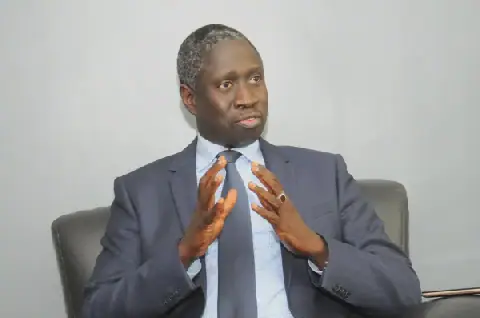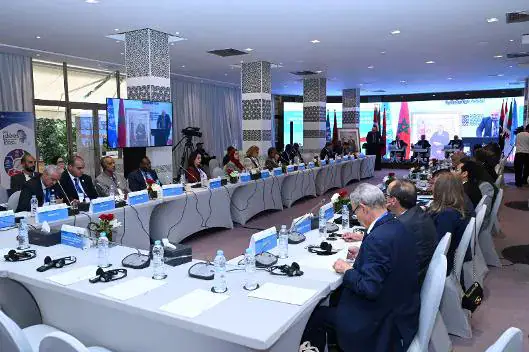
The 41st meeting of the Intergovernmental Committee of High Officials and Experts (CIHFE) for North Africa opened in Rabat, Morocco, on November 3, 2026. The three-day hybrid meeting, organized by the North Africa Bureau of the Economic Commission for Africa (ECA), brings together high officials and experts to discuss ways to strengthen economic resilience in the face of simultaneous global shocks. The meeting is chaired by Algeria, with Egypt as Vice-Chair and Mauritania as Rapporteur.
Tarek Bouhlel, Director General of African Cooperation at the Tunisian Ministry of Economy and Planning, emphasized the need for economic resilience in North Africa, citing the region's vulnerability to geopolitical tensions, supply chain disruptions, and rising debt costs. Despite a growth in real GDP from 4.2% to 4.6% in 2025, Bouhlel stressed that "reinforcing economic resilience mechanisms has become an emergency rather than a choice." He proposed three key areas for focus: financial sovereignty, collective African action, and amplifying the continent's voice in international forums.
Bouhlel suggested that financial sovereignty can be achieved through risk-sharing, transforming isolated projects into investment platforms, and mobilizing domestic capital and diaspora transfers. He also highlighted the importance of implementing the African Continental Free Trade Area (AfCFTA) and connecting infrastructure to boost regional integration. Furthermore, he called for a stronger voice for Africa in international forums such as the G7, G20, and COP31 to push for reforms to the international financial architecture and address climate adaptation, food security, and energy security.
Tarek Ben Salem, Secretary General of the Arab Maghreb Union (AMU), noted that the current context is marked by fluctuations in energy and food prices, logistical disruptions, and inflationary pressures. He emphasized that responses to these challenges cannot be solely national, but rather require strengthened regional cooperation, intensified trade, and the development of regional value chains. Ben Salem proposed continuing consultations with the ECA to transform common priorities into actionable initiatives.
Dr. Nassim Oulmane, Director of the ECA's North Africa Bureau, outlined the bureau's 2027 work program, which focuses on making resilience a reality in public policies. The program includes four key areas: budgetary resilience and debt, diasporas and transfers, productive economies and AfCFTA, and a toolbox for resilient growth. Oulmane emphasized the need to move from reacting to shocks to anticipating them and from national responses to regional solutions.
The CIHFE meeting will examine achievements from 2025-2026 and define orientations for 2027. Several presentations were made on the first day, including an overview of socio-economic profiles in North Africa and a report on social programs in the region. The meeting will also discuss technical cooperation, financing for development, and tools for mobilizing domestic resources.
The recommendations from the CIHFE meeting will be submitted to the 59th session of the ECA and the 2027 Conference of Ministers (COM2027) in Addis Ababa, which will focus on shaping the future of work in Africa and youth employment. The ECA's North Africa Bureau, based in Morocco, supports seven countries in the region, including Algeria, Egypt, Libya, Morocco, Mauritania, Sudan, and Tunisia.
Key points
- The 41st CIHFE meeting in Rabat focuses on strengthening economic resilience in North Africa in the face of global shocks.
- The meeting proposes key areas for focus, including financial sovereignty, collective African action, and amplifying the continent's voice in international forums.
- The ECA's North Africa Bureau outlined its 2027 work program, which includes budgetary resilience and debt, diasporas and transfers, productive economies and AfCFTA, and a toolbox for resilient growth.