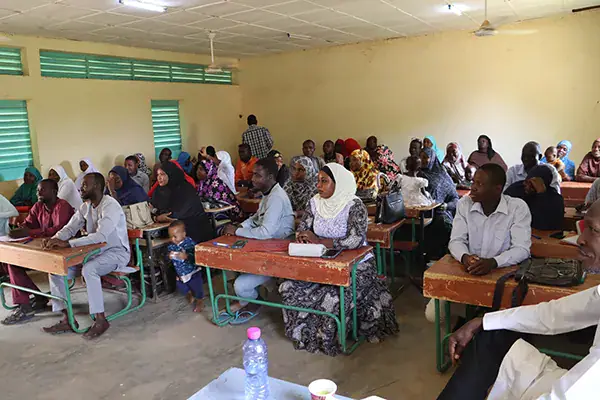
A training session for 320 teachers from Niger's Tillabéri region began on November 1, 2026, at the École normale d'instituteurs de Tillabéri. The program, funded by the Association internationale de développement (IDA) du Groupe de la Banque mondiale through the Projet Niger LIRE, aims to equip teachers with the skills to implement the Dispositif d'éducation alternative harmonisée (DEAH). This initiative targets children aged 9-16 who are out of school or have dropped out early.
The DEAH program combines three educational formulas: Stratégie de scolarisation accélérée par les passerelles (SSAP), Centres d'éducation alternative (CEA), and Centres communautaires d'éducation alternative pour les jeunes (CCAG). The program's goal is to provide a tailored response to the challenges of accessing education and school dropouts. The training, led by 12 instructors, focuses on the principles, organization, and functioning of DEAH.
The DEAH program is structured around three learning levels, catering to children with different educational backgrounds. The first level targets children aged 9-16 who have never attended school. The second level focuses on those who have experienced early dropout, while the third level is for learners with advanced knowledge. This organization allows for a more flexible teaching framework, adapting to each child's learning pace and level.
The program's approach aims to reintegrate children into the education system when possible. Those who meet the age and level requirements can take the Certificat de fin d'études du premier degré (CFEPD) and continue their education at collège. Others may be directed to Centres de formation aux métiers (CFM) or workshops for life skills training. The program also establishes connections with Centres d'éducation et de développement (CED).
A key aspect of DEAH is its proximity approach, which involves identifying out-of-school children in local communities. In targeted villages, program implementers conduct a census of children within the target age group, including those living on the streets or facing exclusion from education. The goal is to ensure that no child in this age group is left without learning opportunities.
The Projet Niger LIRE, funded by the IDA du Groupe de la Banque mondiale, supports the state's efforts to improve education quality and expand access. The DEAH program exemplifies the need for diverse training pathways to address the needs of children who have not followed traditional schooling. Its success relies on effective pedagogical supervision, learner follow-up, and local actors' ability to identify remaining out-of-school children.
The training session for the 320 teachers will conclude on November 12, 2026. Upon completion, they will be equipped to implement the DEAH program, providing education to out-of-school children in the Tillabéri region. The program's impact will be closely monitored, with the goal of expanding access to education and improving learning outcomes for disadvantaged children.
Key points
- The DEAH program targets children aged 9-16 who are out of school or have dropped out early.
- The program combines three educational formulas to provide a tailored response to education challenges.
- The training session for 320 teachers is funded by the Association internationale de développement (IDA) du Groupe de la Banque mondiale through the Projet Niger LIRE.