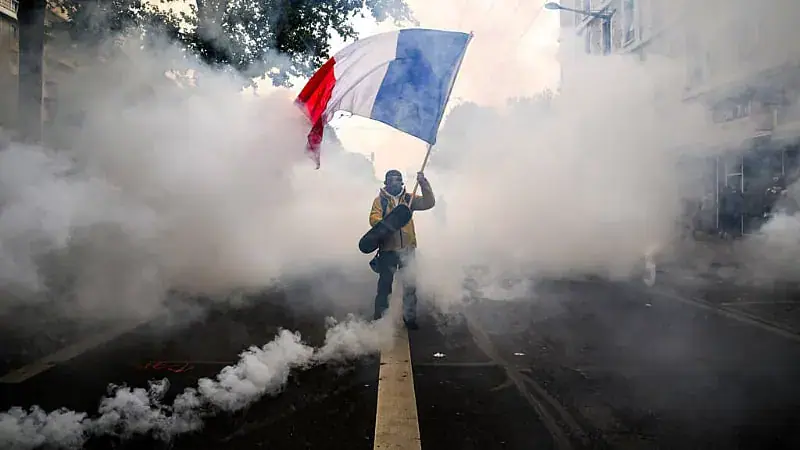
On Saturday, October 31, 2026, approximately 320,000 demonstrators participated in largely peaceful protests across France. The demonstrations, which marked the third consecutive weekend of protests, were driven by widespread discontent over living costs and strained public services. While the protests were generally peaceful throughout the afternoon, scuffles broke out in Paris and other French cities in the evening. Authorities had warned of potential further violence overnight, particularly with Halloween celebrations underway.
The protests, which began with students mobilizing in September, brought together a diverse group of participants, including trade unions and a smaller contingent of anti-establishment Yellow Vest protesters. They were united in their complaints over the cost of living, high fuel prices, rising inflation, and President Emmanuel Macron's government. Protesters, such as Jerome Rodriguez, expressed frustration with the government's handling of the economy, stating that families were struggling while the government seemed out of touch.
In Paris, riot police charged to disperse small groups of rioters at the end of the march, firing tear gas in several cities, including Lyon and Toulouse. Tensions also arose at the end of unauthorized protests in Marseille, but calm had returned by nightfall. Interior Minister Laurent Nuñez reported that security forces had maintained public order and protected city centers, despite facing significant violence.
The protests in France have inspired youth-led "Gen-Z" protests across Europe, with demonstrations taking place in several German cities on Saturday, as well as in Italy. The French government's promises to reform education and ease fuel costs have failed to calm discontent, with students, trade unions, and Yellow Vest protesters continuing to demand action.
The interior ministry reported that 70,000 protesters participated in Paris, with turnout lower than in the previous two Saturdays. Organizers estimated nearly half a million participants. The ministry also stated that radical elements had attempted to break away from marches in several cities, but were thwarted by security forces. Authorities discovered people carrying objects that could be used as weapons during security checks at railway stations and roads.
The unrest comes at a delicate moment for the government, with ratings agency Fitch revising the outlook on French debt to negative, citing investor concerns over the country's finances. Public debt is nearing 120 percent of economic output, and borrowing costs are rising, limiting the government's room for maneuver. The US Embassy advised travelers to avoid areas where demonstrations or large gatherings were planned.
The protests have handed a political boost to far-right leader Marine Le Pen, who leads opinion polls ahead of April's presidential election. The troubles are the latest blow to an economy that data showed was already shrinking in the third quarter. The Chamber of Commerce estimates that losses to retailers during the three weeks of unrest have exceeded €1 billion ($1.1 billion).
Key points
- The protests were largely peaceful, with 320,000 demonstrators participating across France.
- The demonstrations were driven by discontent over living costs, public services, and President Emmanuel Macron's government.
- The unrest has had significant economic impacts, with estimated losses to retailers exceeding €1 billion.