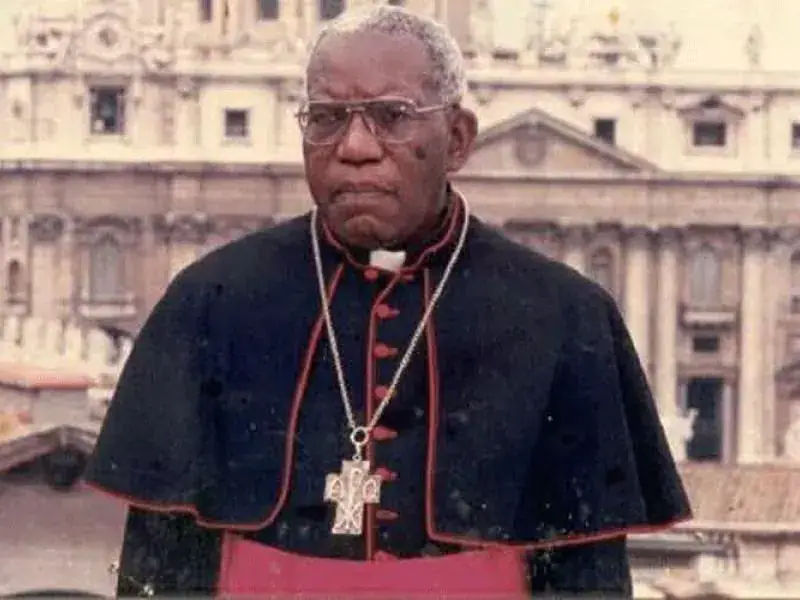
The civil society of Sud-Kivu commemorated the 30th anniversary of the assassination of Mgr Christophe Munzihirwa, the Archbishop of Bukavu, by launching a message to actors involved in conflicts in eastern Democratic Republic of Congo. They urged them to put an end to the war that has been affecting the region for decades. According to the civil society, Mgr Munzihirwa was killed for daring to say no to an imported war, the plundering of the DRC's resources, and the complicit silence of the international community.
In their message of tribute, the civil society emphasized that Mgr Munzihirwa had refused to be a spectator to his own destruction. They described him as a symbol of resistance against foreign interference and the exploitation of the country's resources. The civil society stated that the current context of war is similar to that of 1996, when Mgr Munzihirwa was assassinated. They criticized those who have taken up arms against the Republic and those who have joined the Forces du Renouveau et de la démocratie (FRN), which they say is responsible for the suffering of the population.
The civil society of Sud-Kivu also addressed the authorities in Kinshasa, warning them against the upcoming referendum. They argued that this process does not respect the current will of the Congolese people and criticized those who have taken up arms against the Republic. The civil society accused some leaders of using the FRN to further their own interests and of financing militias that are responsible for violence in the region.
The civil society called on all actors involved in the conflicts, including Kinshasa and Goma, to work towards bringing peace to the region, ending the plundering of natural resources, and stopping the humiliation of the Congolese people. They promised to continue fighting against injustice and to never remain silent in the face of oppression. The civil society emphasized that the best tribute to Mgr Munzihirwa is to refuse division, fear, and to say no to those who seek to destroy the country.
Mgr Munzihirwa's assassination on October 30, 1996, was a significant event in the history of the DRC. He was killed during a period of great turmoil in the country, marked by the invasion of foreign troops and the exploitation of the country's resources. The civil society's message is a reminder of the need for the government and other actors to address the root causes of the conflict and to work towards a lasting peace.
The conflict in eastern DRC has resulted in the displacement of millions of people and has had a devastating impact on the local economy. The civil society's call for peace and an end to the plundering of resources is echoed by many other organizations and individuals who are working to bring stability to the region. Denis Mukwege, a renowned Congolese doctor and Nobel laureate, recently called on the population to continue Mgr Munzihirwa's fight for dignity and peace.
The 30th anniversary of Mgr Munzihirwa's assassination is a reminder of the need for the government and other actors to prioritize the well-being and safety of the Congolese people. The civil society's message is a call to action for all those who are involved in the conflict to work towards a lasting peace and to address the root causes of the violence.
Key points
- The civil society of Sud-Kivu is calling on the government and FRN to work towards a lasting peace in the region.
- The upcoming referendum has been criticized by the civil society, who argue that it does not respect the current will of the Congolese people.
- Mgr Munzihirwa was killed for daring to say no to an imported war, the plundering of the DRC's resources, and the complicit silence of the international community.