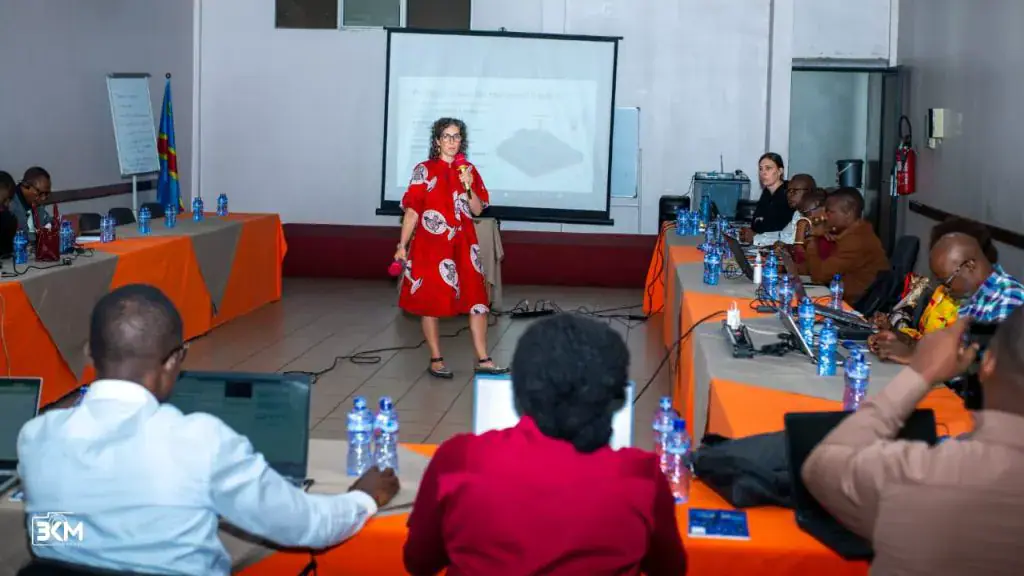
A 5-day training session began on November 23 and will run until November 27, bringing together 28 experts from various environmental sectors in the Democratic Republic of Congo. The training aims to enhance the skills of these experts in using tools for monitoring peatlands in the Congo Basin. The program includes practical exercises on accessing, processing, and analyzing satellite data, monitoring changes in forest cover, detecting fires, and integrating remote sensing data with field observations.
The training session is part of a project titled "Securing crucial biodiversity, carbon, and water reserves in the Congo Basin peatlands through informed decision-making and good governance." This initiative is a collaboration between the Food and Agriculture Organization (FAO) of the United Nations, the International Climate Initiative (IKI) of the German government, and the United Nations Environment Programme (UNEP). The project seeks to promote the conservation and sustainable management of peatlands in the Congo Basin, which are a vital ecological heritage, hosting remarkable biodiversity, storing significant amounts of carbon, and playing a crucial role in climate regulation and water security.
According to Dominique Endamana, Environment Cluster Lead at FAO, this training goes beyond technical capacity building, as it fosters collaboration among institutions, sharing of experiences, and harmonization of national and regional initiatives. He emphasized that the acquired knowledge should be utilized by concerned institutions to contribute sustainably to improving the national peatland monitoring system. Endamana also reaffirmed FAO's commitment to supporting the Congolese government in strengthening environmental governance, biodiversity conservation, and sustainable management of natural resources, particularly in the face of climate change challenges.
The training is a continuation of efforts initiated in 2023, following consultations organized by FAO and UNEP-DHI in Kinshasa and Brazzaville, as well as national workshops in March 2024. These events identified key issues related to peatland monitoring and water resource management. Endamana expressed gratitude to IKI for its financial support and UNEP for its technical assistance and partnership. The Congo Basin peatlands are a global ecological treasure, hosting remarkable biodiversity, storing significant amounts of carbon, and playing a vital role in regulating the climate, hydrological cycle, and water security for local populations.
The Democratic Republic of Congo, along with other countries in the region, faces significant environmental challenges, including deforestation, pollution, and climate change. The Congolese government has been working to strengthen its environmental governance and conservation efforts, particularly in the context of the Congo Basin peatlands. The training session is an essential step in this direction, as it enhances the capacity of national experts to monitor and manage peatlands effectively.
The project "Securing crucial biodiversity, carbon, and water reserves in the Congo Basin peatlands through informed decision-making and good governance" aims to support the conservation and sustainable management of peatlands in the region. This initiative is critical, as peatlands play a vital role in regulating the climate, and their degradation can have severe consequences for the environment and local communities.
The collaboration between FAO, IKI, and UNEP demonstrates the commitment of international organizations to supporting the Democratic Republic of Congo in its environmental conservation efforts. The training session is a significant step towards enhancing the country's capacity to manage its natural resources sustainably and mitigate the impacts of climate change.
Key points
- The training session aims to enhance the skills of 28 experts in using tools for monitoring peatlands in the Congo Basin.
- The project seeks to promote the conservation and sustainable management of peatlands in the Congo Basin.
- The initiative is a collaboration between FAO, IKI, and UNEP to support the Congolese government in strengthening environmental governance and conservation efforts.