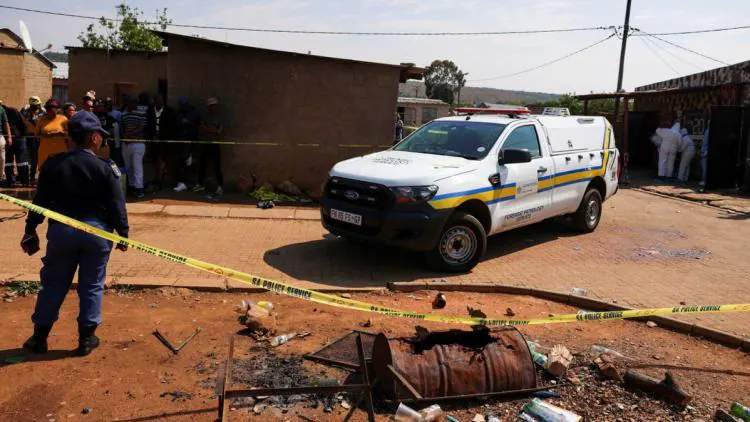
A devastating double shooting occurred in South Africa on September 27, 2026, leaving 27 people dead and many more injured. The first shooting took place in a bar in Johannesburg, where eight armed men stormed in, killing 17 people and injuring 15 others, before setting vehicles on fire and fleeing. A second shooting occurred in a nightclub in Cape Town, resulting in 10 deaths and 11 injuries. The motives behind these massacres are still unknown.
The double shooting has once again highlighted the alarming rate of crime in South Africa, which is considered one of the highest in Africa and the world. According to statistics, the country records an average of 60 homicides daily. The South African Police have promised a significant reward for any information leading to the capture of the perpetrators. However, the police and government face a daunting task in curbing the violence, with many factors contributing to the problem, including the ease of access to firearms.
The South African government, led by President Cyril Ramaphosa, has been struggling to address the issue of crime, despite efforts to deploy more police officers and increase arrests. The deployment of 2,200 soldiers until 2027 aims to bolster security, but its effectiveness remains uncertain. Experts argue that the root cause of the problem lies in the country's social model, characterized by stark inequalities between the rich and the poor. Until this issue is addressed, crime is likely to persist.
The current wave of violence against foreigners in South Africa has also raised concerns, with many arguing that it will not solve the country's crime problem. The treatment of foreigners has been widely criticized, and some experts believe that the government should focus on addressing the real causes of crime rather than targeting a specific group. The double shooting serves as a reminder that the country's crime problem is complex and multifaceted.
President Ramaphosa faces a significant challenge in addressing the issue of crime, and one of the key areas to focus on is the control of firearms. The ease with which people can access guns has contributed to the high rate of violence in the country. Implementing stricter gun control laws and increasing security measures could help reduce the incidence of crime. However, this will require a concerted effort from the government and law enforcement agencies.
The international community has expressed concern about the situation in South Africa, particularly with regards to the high rate of femicide and violence against women. The country needs to take a comprehensive approach to address these issues, including implementing policies and programs aimed at reducing inequality and promoting social cohesion. The government must also work to restore trust and confidence in law enforcement agencies.
As the investigation into the double shooting continues, the people of South Africa are left to wonder when the violence will end. The government has a critical role to play in addressing the root causes of crime and implementing effective solutions. The fate of the country and its people depends on it. The nation is waiting for a response from President Ramaphosa and his government on how they plan to address this growing concern.
Key points
- The double shooting in South Africa has highlighted the need for the government to address the root causes of crime, including inequality and access to firearms.
- The country's high crime rate is a major concern, with an average of 60 homicides occurring daily.
- The government faces a significant challenge in curbing violence, and a comprehensive approach is needed to address the issue.