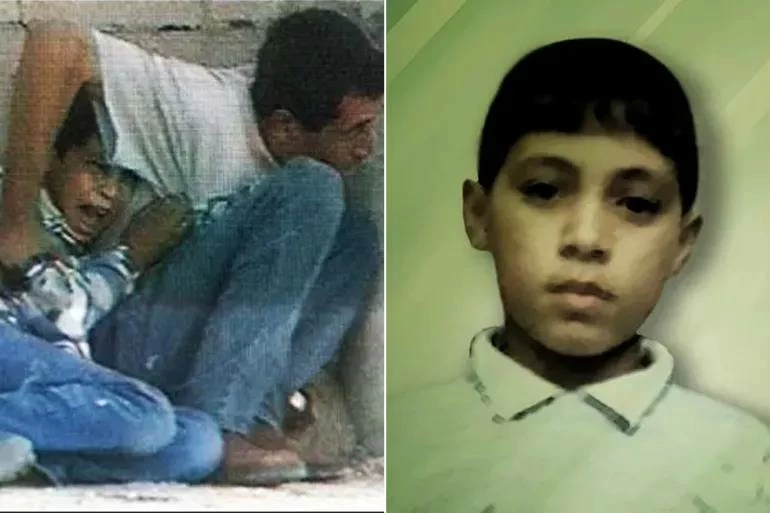
On September 30, 2000, during the Al-Aqsa Intifada, Muhammad Al-Durah, a 12-year-old Palestinian boy, was killed in Gaza Strip. His last words to his father, Jamal, were "Reassure, Father, I'm fine. Don't fear them." These poignant words have become an enduring symbol of Palestinian resilience. Muhammad's killing sparked widespread outrage and condemnation globally. His father, Jamal, attempted to shield him from Israeli gunfire, but Muhammad was fatally wounded.
Muhammad was born on November 22, 1988, in the Brij refugee camp in the Gaza Strip. His family originated from the city of Ramla, which was occupied and depopulated by Israel in 1948. His parents, Jamal and Amal, struggled to raise their children in the challenging circumstances of the Gaza Strip. Muhammad had completed his elementary education until the fifth grade. His school was closed due to protests on the day of his death.
On the day of his death, Muhammad and his father were walking in the Salah al-Din Street in Gaza when they came under Israeli fire. They took cover behind a concrete barrel, but Jamal was wounded in his right hand, and Muhammad was hit in his right leg. As the gunfire continued, Muhammad was struck again, this time in the back. His father's attempts to save him were in vain.
In the aftermath of Muhammad's death, Israeli authorities and some Jewish extremist groups attempted to shift the blame to Palestinian militants. However, evidence later confirmed that Israeli soldiers were responsible for the killing. French-Israeli journalist Charles Enderlin, in his book "The Death of a Child," revealed that Israeli army operations commander Giora Eilad admitted that the shots likely came from Israeli soldiers.
Muhammad Al-Durah became an icon of the Palestinian Intifada, symbolizing the suffering and resilience of the Palestinian people. His image has been etched in the collective memory of the global community. The Al-Aqsa Intifada, which began on September 28, 2000, after Ariel Sharon's visit to the Al-Aqsa Mosque, resulted in the deaths of 4,412 Palestinians and 48,322 injuries, as well as 1,069 Israeli fatalities and 4,500 injuries.
Twenty-six years after his death, Muhammad Al-Durah's image has been included in the Egyptian high school curriculum. His photograph, which has become an enduring symbol of Palestinian suffering, is now part of the country's educational materials. This move serves as a testament to the lasting impact of his story on the global community.
Today, Muhammad Al-Durah's legacy continues to inspire and remind the world of the human cost of conflict. His story serves as a poignant reminder of the need for peaceful resolution and understanding. As the world remembers Muhammad Al-Durah, it is essential to acknowledge the ongoing struggles of the Palestinian people and the importance of working towards a just and lasting solution.
Key points
- Muhammad Al-Durah's killing on September 30, 2000, has become a powerful symbol of Palestinian resistance against Israeli occupation.
- Israeli authorities initially attempted to blame Palestinian militants for Muhammad's death, but evidence later confirmed that Israeli soldiers were responsible.
- Muhammad Al-Durah's image has been included in the Egyptian high school curriculum, ensuring his story continues to inspire and educate future generations.