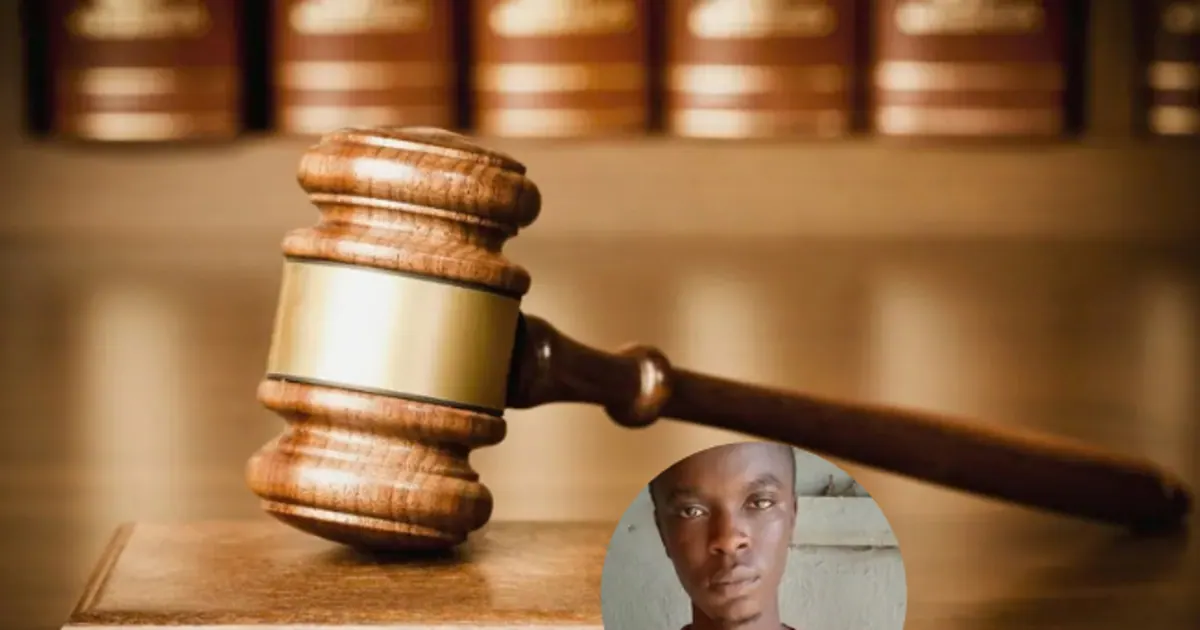
A Kogi State High Court in Lokoja has sentenced 24-year-old Dahiru Yusuf Abbah to death by hanging for culpable homicide in the death of his father, Dahiru Yusuf. The court found Abbah guilty following a stabbing incident in the Sarkin-Noma area of Lokoja on October 5, 2024. Justice M.M. Gwatana delivered the judgment, ruling that the prosecution had established Abbah's guilt beyond reasonable doubt under Section 221 of the Kogi State Penal Code, 2019.
The case stemmed from an incident involving Abbah and his father, Dahiru Yusuf. The prosecution, led by Barrister M. Abaji, told the court that Abbah stabbed his father in the chest and back during the attack. Dahiru was taken to hospital for treatment but died from his injuries four days later, on October 9, 2024. Abbah was subsequently arraigned in case number HCL/01C/2025 on two charges: culpable homicide and criminal conspiracy.
During the trial, the prosecution called nine witnesses, including the deceased's wife, Hajia Jumai Dahiru, and two of Abbah's siblings, Nafisat Dahiru and Auwwal Dahiru. The prosecution also presented nine exhibits, among them a knife, the deceased's blood sample, Abbah's blood-stained shirt, a digital forensic report, and a CD analysis. However, none of the nine prosecution witnesses testified that they had directly seen Abbah stab his father.
Despite the lack of direct witness testimony, Justice Gwatana found the circumstantial evidence strong enough to establish Abbah's guilt beyond reasonable doubt. The judge considered the evidence presented by the prosecution, including the blood-stained clothing and testimonies from members of the deceased's family. The court also considered evidence presented by Abbah's defence, including testimony from an Islamic cleric relating to inheritance.
Abbah had also identified three people who could potentially support his alibi — a tea seller known as Mai Shai, Aunty Ladidi, and a man identified as Danladi. However, none of them appeared in court to give evidence. While the court found Abbah guilty of culpable homicide, it dismissed the separate criminal conspiracy charge after ruling that the prosecution had not provided enough evidence to prove it.
Following the judgment, Abbah's lawyers, Mohammed S. Inuwa and Mohammed S. Maihaja, said they would appeal the decision. They argued that the court had relied on evidence they considered inadmissible. Abbah maintained his innocence and appealed for clemency. Yusuf Bala, head of the deceased's family, welcomed the judgment, saying the family had no personal grudge against Abbah but wanted justice.
The conviction and death sentence can still be challenged on appeal. Abbah's case highlights the complexities of Nigeria's justice system, where courts rely on circumstantial evidence to secure convictions. The case also raises questions about the role of witness testimony in securing convictions and the rights of defendants.
Key points
- A Kogi State High Court sentenced 24-year-old Dahiru Yusuf Abbah to death by hanging for stabbing his father to death despite no direct witness testimony.
- The prosecution presented nine exhibits, including a knife and blood samples, to secure the conviction.
- Abbah's lawyers have appealed the decision, arguing that the court relied on inadmissible evidence.