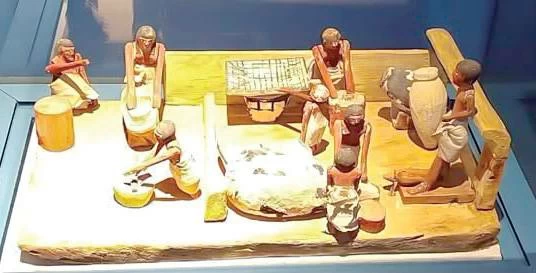
In a nationwide celebration, 24 museums across Egypt have announced the winners of the "Taj October 2026" competition. The competition, which was open to various museums across the country, saw a large number of historic artifacts and relics vying for the top spot. The winners were chosen through a public vote, with the museums using their official Facebook pages to garner support for their entries. This initiative aims to engage the public in Egypt's rich cultural heritage.
The Police Museum at Salah El-Din Al-Ayubi Citadel is showcasing a light machine gun of the "Degtyaryov" model, made in Russia, which was used by the Egyptian army during the 1973 October War. Meanwhile, the Mohamed Ali Palace Museum in Manial is displaying a painting of Ibrahim Pasha, dressed in his military uniform, with his soldiers' tents visible in the background, highlighting his military campaigns. These artifacts provide a glimpse into Egypt's military history and its significance.
The Imhotep Museum in Saqqara is featuring a colored limestone base of a statue of King Djoser. This artifact is a significant addition to the museum's collection, showcasing the artistic and architectural achievements of ancient Egypt. The museum's collection provides valuable insights into the history of ancient Egyptian art and architecture.
The Tell Basta Museum in Sharqia is displaying a terracotta statue of a military leader from the Greek era, showcasing the artistic skills of the time. The statue exudes strength and authority, reflecting the military prowess of ancient Egypt. This artifact highlights the cultural exchange between ancient Egypt and other civilizations.
The Luxor Museum of Ancient Egyptian Art is featuring the mummy of King Ahmose I, the founder of the 18th dynasty and the liberator of Egypt from the Hyksos. The mummy, discovered in the Deir el-Bahri cache, is estimated to be around 33 years old at the time of death. King Ahmose I is known for his military and strategic skills, which played a crucial role in Egypt's liberation.
The Mummification Museum in Luxor is showcasing the mummy and lower part of a large coffin of Masherty, a high priest of Amun Ra and commander of the army, from the 21st dynasty. The mummy is an excellent example of the advanced mummification techniques used during that era. Masherty's titles, including religious and military honors, reflect his prominent position in ancient Egyptian society.
The Royal Carriages Museum in Boulaq is featuring the "Vegetable Cart," which dates back to the reign of Khedive Abbas Hilmi II (1892-1914). The cart was used to transport vegetables and fruits in royal palaces and was designed with tin lining to preserve its contents. This artifact provides a glimpse into the daily life of the royal family during that era.
Key points
- The "Taj October 2026" competition aims to engage the public in Egypt's rich cultural heritage by showcasing historic artifacts and relics.
- 24 museums across Egypt are participating in the competition, showcasing a wide range of artifacts and relics.
- The winners were chosen through a public vote, with the museums using their official Facebook pages to garner support for their entries.