The US military intervention in Iraq began on March 20, 2003, when the US and Britain launched a military operation aimed at overthrowing Saddam Hussein's regime. The invasion led to the fall of Baghdad on April 9, 2003, and the collapse of the Ba'ath Party, which had ruled Iraq for decades. The US then established the Coalition Provisional Authority to administer the country during the transitional period. In May 2003, the US decided to dissolve the Iraqi army and implement measures to dismantle the Ba'ath Party, decisions that would later become highly controversial.
Following the invasion, Iraq struggled to stabilize, and various armed groups emerged, including Ba'athist and Sunni groups, as well as Al-Qaeda in Iraq and Shia militias. The US military's mission shifted from toppling the regime to countering the growing insurgency, which spread to cities like Baghdad, Fallujah, and Najaf. In 2004, the US faced significant challenges, including the first Battle of Fallujah and the Abu Ghraib prison abuse scandal, which damaged the US reputation during the occupation.
In 2005, Iraq held elections and drafted a new constitution in an effort to build a new political system. However, this process was accompanied by escalating violence, particularly after the February 2006 bombing of the Al-Askari mosque in Samarra, which sparked widespread sectarian violence between Sunnis and Shias. The US responded with a new strategy, known as the "surge," in January 2007, which involved sending additional troops to Iraq and changing military deployment tactics.
The surge, combined with the emergence of Sunni tribal groups opposing Al-Qaeda in Iraq, contributed to a significant decline in violence levels in 2007 and 2008. In 2008, the US and Iraq signed a security agreement that set a timeline for the withdrawal of US forces, which began to pull out of Iraqi cities in 2009. The US formally ended combat operations in 2010, and by December 2011, the US military had completely withdrawn from Iraq.
However, the withdrawal did not bring an end to instability in Iraq. The country continued to experience bombings, armed attacks, and sectarian tensions, creating an environment in which extremist groups like ISIS could thrive. In June 2014, ISIS launched a major attack that led to the capture of Mosul, Iraq's second-largest city. The group's brutal tactics, including the massacre of Yazidis in Sinjar and the killing of hundreds of Iraqi soldiers at Camp Speicher, drew international condemnation.
In response to the ISIS threat, the US returned to Iraq in 2014, but this time as part of an international coalition focused on supporting Iraqi forces in the fight against ISIS. The US provided air support, intelligence, training, and military advice to Iraqi and Kurdish forces. Over the following years, Iraqi forces, backed by the coalition, managed to retake several cities and areas controlled by ISIS, including Tikrit in 2015, Fallujah in 2016, and Mosul in 2017.
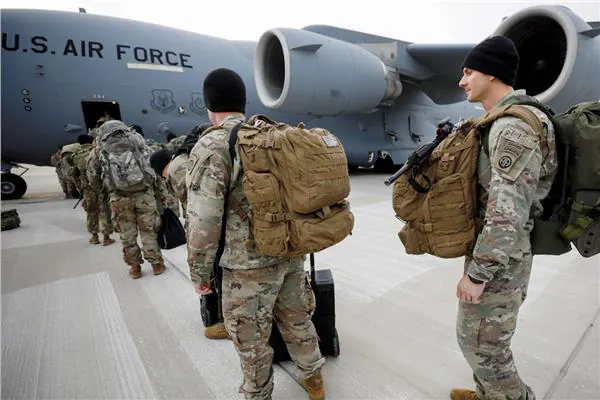
On September 30, 2026, the US announced the completion of its military withdrawal from Iraq, marking the end of 23 years of military intervention. The withdrawal decision was made as part of a broader shift in the US-Iraq relationship, with a focus on diplomatic and economic cooperation. The US military intervention in Iraq has had a profound impact on the country and its people, resulting in hundreds of thousands of deaths, widespread displacement, and significant economic and infrastructure damage.
Key points
- The US military intervention in Iraq began with the 2003 invasion and ended with the withdrawal of US forces in 2026.
- The intervention involved various phases, including the initial invasion, counterinsurgency efforts, and the fight against ISIS.
- The US military presence in Iraq resulted in significant human costs, displacement, and economic damage.