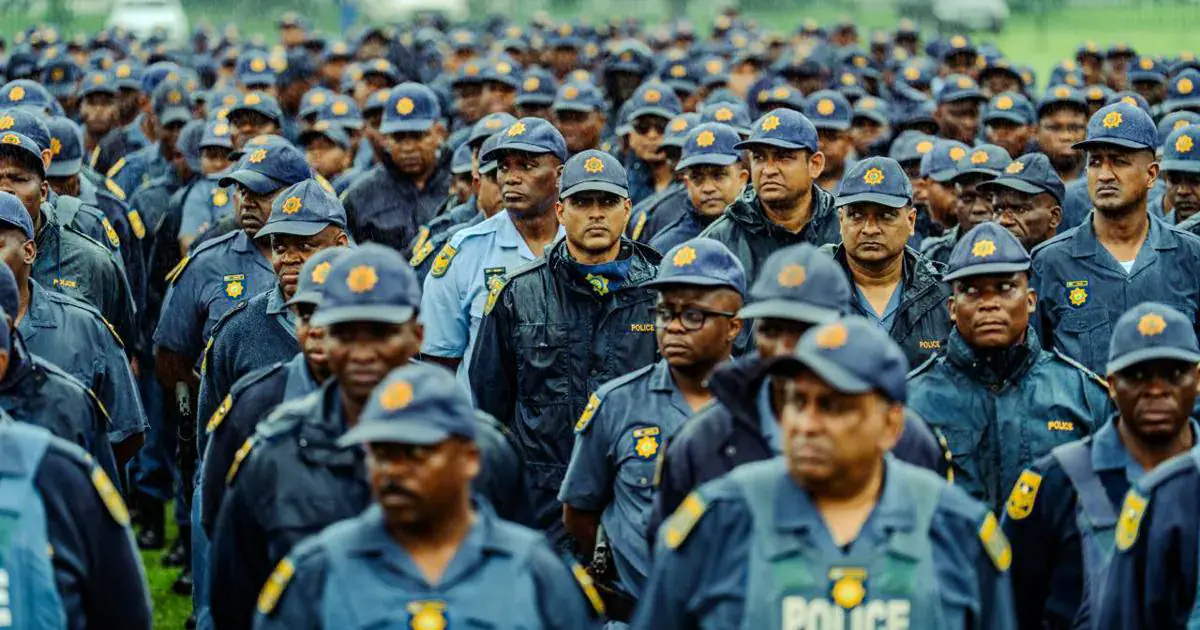
The National Joint Operational and Intelligence Structure (NATJOINTS) has reported 21 criminal cases during the two days of special voting in South Africa ahead of the local government elections. These cases include murder and theft, with 6 arrests made. NATJOINTS chairperson Tebello Mosikili stated that 5 of the cases have already been processed in court. The cases were reported across various parts of the country, with some incidents involving election materials.
According to Mosikili, the cases include 2 suspects arrested in the Eastern Cape for impersonating an IEC official, 1 suspect arrested in Mpumalanga for destroying election material, and 1 suspect arrested for malicious damage to property in Pienaar, Mpumalanga. The law enforcement collective is working to ensure a smooth voting process and to monitor the elections. More than 29 million South Africans are registered to vote at 23,696 voting stations across the country.
The Electoral Commission of South Africa (IEC) has expressed concern about the spread of misinformation and has warned against conduct that could disrupt the voting process. The commission is working closely with law enforcement agencies to ensure that voters are able to cast their ballots safely and securely. Voting stations will open at 7 am and close at 9 pm.
The local government elections are taking place on Wednesday, and the special voting period is aimed at allowing certain groups, such as voters with disabilities and those who will be away on voting day, to cast their ballots early. The elections are expected to be closely contested, with various parties vying for control of municipalities across the country.
The ANC, DA, and FF+ are among the parties that have been actively campaigning in the lead-up to the elections. The MK Party has also been campaigning, with officials recently visiting the KwaZulu-Natal South Coast following the murder of a regional coordinator. The elections are seen as crucial for the country's democracy and for the delivery of services to communities.
The spread of misinformation has been a concern in the lead-up to the elections, with the IEC and other stakeholders working to counter false information and ensure that voters have accurate information. The use of social media has been highlighted as a key area where misinformation can spread quickly.
The local government elections are a critical component of South Africa's democracy, and the outcome will have a significant impact on the delivery of services to communities. The elections will determine the composition of municipalities and the allocation of resources. Key Point: 21 criminal cases reported during special voting; 6 arrests made; 5 cases already processed in court.
Key points
- 21 criminal cases reported during special voting
- 6 arrests made
- 5 cases already processed in court