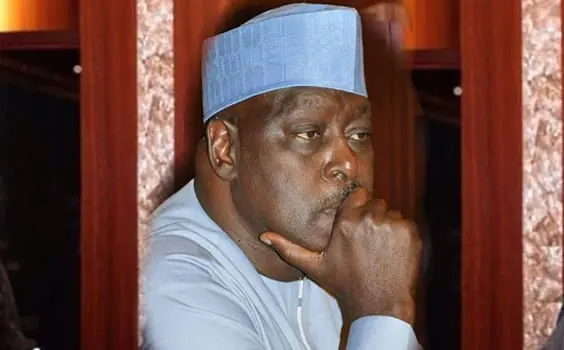
Former Secretary to the Government of the Federation, Babachir Lawal, has disclosed that Peter Obi and Rabiu Kwankwaso had concerns about former Vice-President Atiku Abubakar's influence in the African Democratic Congress (ADC) before joining the party. Lawal made this statement on Arise Television's Prime Time, recounting the negotiations that led to Obi and Kwankwaso's involvement with the opposition party ahead of the 2027 elections. He claimed to have played a significant role in persuading both politicians to join the ADC despite their concerns.
According to Lawal, he attended every meeting of the ADC and was instrumental in convincing Peter Obi to join the party. Obi was initially hesitant but eventually agreed after several discussions. Lawal stated, "I attended every meeting of the ADC, and at one time, Peter Obi was playing in and out. I was the one who finally dragged Peter into the ADC and committed him to joining the ADC." This suggests that Lawal had significant influence in Obi's decision-making process.
Lawal also claimed that Rabiu Kwankwaso was worried that Atiku's involvement could affect the party's prospects. Kwankwaso allegedly feared that with Atiku Abubakar in the party, nothing good would come out of the ADC. Lawal's statements imply that both Obi and Kwankwaso had significant reservations about Atiku's influence in the party. These concerns, however, did not deter them from eventually joining the ADC.
Lawal further disclosed that Obi had concerns about the ADC presidential primary process. Obi reportedly preferred a consensus arrangement, arguing that an open primary could favor candidates with greater financial resources and political influence. This preference for a consensus arrangement suggests that Obi was concerned about the potential for manipulation in the primary process.
The failure to agree on a consensus candidate contributed to Obi and Kwankwaso's eventual exit from the ADC. Lawal claimed that both politicians later became convinced that the primary process was being tilted in favor of Atiku. This perception likely contributed to their decision to leave the party. Lawal, who had previously been an ally of Atiku, also left the ADC after the former vice-president emerged as the party's presidential candidate.
Lawal had earlier alleged that the primary was manipulated, a claim that has not been accepted by all actors within the party. He has since joined the Nigeria Democratic Congress (NDC), the platform backing Obi and Kwankwaso as its presidential and vice-presidential candidates ahead of the 2027 election. This move suggests that Lawal remains committed to supporting Obi and Kwankwaso's presidential bid.
The latest comments from Lawal come amid ongoing political realignments and internal debates within opposition camps ahead of the 2027 presidential contest. The developments suggest that the opposition parties are still in the process of strategizing and positioning themselves for the upcoming election. The involvement of key players like Obi, Kwankwaso, and Lawal will likely shape the outcome of the election.
Key points
- Peter Obi and Rabiu Kwankwaso had reservations about Atiku Abubakar's influence in the African Democratic Congress (ADC) before joining the party.
- Babachir Lawal played a significant role in persuading Obi and Kwankwaso to join the ADC despite their concerns.
- The failure to agree on a consensus candidate contributed to Obi and Kwankwaso's eventual exit from the ADC.