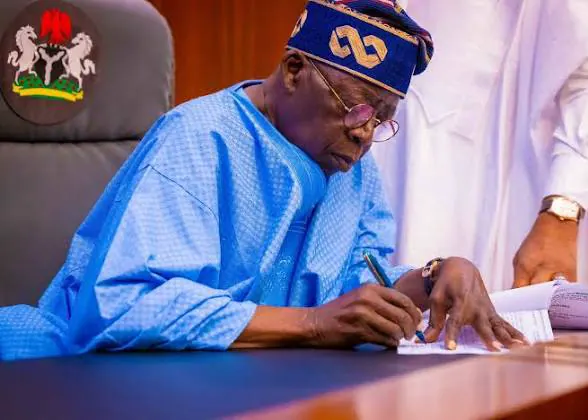
The President Bola Tinubu-led administration has clarified that there are no immediate plans to increase electricity tariffs, despite earlier hints of a possible review. This clarification comes after policy experts cautioned against the move, warning that any further increase in electricity tariffs could worsen the economic burden on Nigerians already reeling from the effects of fuel subsidy removal.
The Minister of Power, Mr. Joseph Tegbe, had previously stated that the electricity subsidy was no longer sustainable and that Nigerians must be prepared to pay more for improved and efficient supplies. This statement sparked public debate and outrage, with many accusing the Tinubu administration of being insensitive to the suffering of Nigerians, particularly with the 2027 presidential elections approaching.
In a recent statement, Tegbe dismissed rumors of an impending tariff hike, stating that the government had not reached a decision on the matter. He made these comments while presenting his scorecard for his first 100 days in office in Abuja. Tegbe highlighted the achievements of his ministry, including the increase in electricity generation and transmission, which had exceeded 5,000 megawatts (MW) in recent weeks.
According to Tegbe, the sector recorded a generation peak of 5,330MW in August and September, following interventions to restore power infrastructure and improve the performance of existing facilities. This represents a significant increase from the 3,700MW to 4,700MW recorded before June 2026. The minister attributed this success to the efforts of his ministry and the cooperation of stakeholders in the power sector.
Despite the current suspension of the planned tariff increase, Tegbe emphasized that the government was still committed to providing efficient and reliable power supply to Nigerians. He noted that the ministry was working to address the challenges facing the power sector, including inadequate infrastructure and inefficient distribution systems.
The decision to halt the planned tariff increase is seen as a relief to Nigerians, who have been experiencing economic hardship in recent times. The fuel subsidy removal has had a significant impact on the economy, and any further increase in electricity tariffs could have exacerbated the situation. The government's decision to prioritize the welfare of citizens is seen as a positive step.
The administration's move to review the electricity tariff was part of a broader effort to reform the power sector and make it more sustainable. However, the government has now decided to focus on other initiatives that will ease the burden on citizens, particularly in the run-up to the 2027 presidential elections.
Key points
- The Tinubu administration has halted a planned electricity tariff increase due to public outcry and economic concerns.
- The government has not ruled out a future tariff review but emphasized that there are no immediate plans to implement a change.
- Electricity generation and transmission have exceeded 5,000MW in recent weeks, with a peak of 5,330MW recorded in August and September.