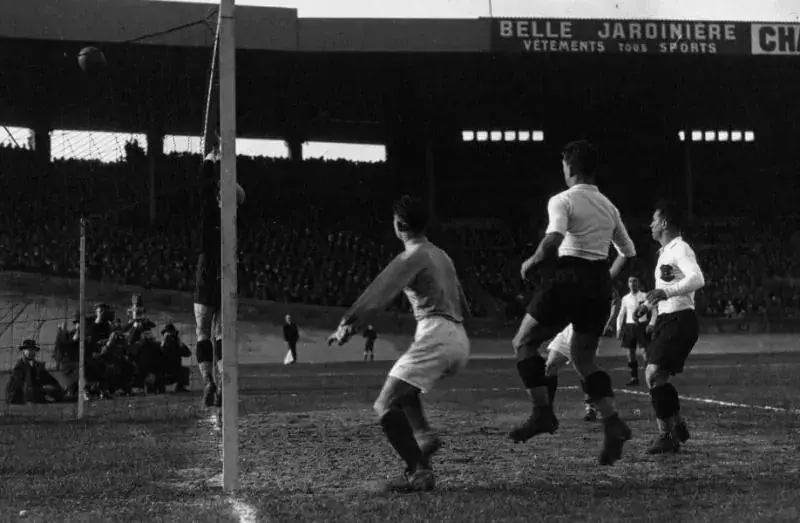
The French football landscape was undergoing a significant transformation in the early 1930s. As the sport gained popularity, it began to professionalize, with the first French professional championship taking place in 1932. Industrialists and businessmen started investing in football, and clubs like Red Star, Olympique de Marseille, and Racing Club de Paris gained international recognition. However, this newfound success came with a price, as the sport became increasingly commercialized.
In a September 1934 article titled "Le football, sport ou industrie?", Regards magazine, a communist publication, launched a fierce attack on the commercialization of French football. The article, written by Alfred Menguy, condemned the exploitation of players, the emphasis on profit over sporting values, and the corrupting influence of money on the sport. Menguy argued that football had become a business, with players treated as commodities and forced to prioritize winning over fair play.
Menguy's critique was not just about the exploitation of players but also about the broader social implications of commercialized sports. He compared the situation of footballers to that of exploited workers, highlighting the long hours, low wages, and lack of protections afforded to them. The article also noted that many players were forced to take on secondary jobs or rely on their families for financial support, with some earning as little as 3-500 francs per month.
The Regards article was not an isolated critique, but part of a larger movement among communist and socialist groups to promote a more equitable and amateur form of sports. As historian Paul Dietschy explains, these groups sought to create a "proletarian sport" that prioritized social values over profit and commercialism. This movement led to the establishment of worker sports federations, which emphasized fair play, solidarity, and social responsibility.
The commercialization of French football in the 1930s was a complex phenomenon, driven by both domestic and international factors. The sport's growing popularity and the influx of industrial investment had created a lucrative market, but one that came at the cost of the players' welfare and the sport's integrity. As Menguy argued, the emphasis on profit and winning had corrupted the sport, turning it into an industry rather than a genuine expression of athleticism and community.
The Regards article sparked a wider debate about the role of commercialism in French football, highlighting the tensions between the sport's amateur roots and its growing professionalization. While some argued that commercialization was necessary to support the sport's growth and development, others saw it as a threat to the sport's values and social purpose. This debate continues to resonate today, with many questioning the impact of commercialism on modern sports.
The legacy of the Regards article and the broader movement to promote a more equitable and amateur form of sports can still be seen in contemporary debates about the role of commercialism in football. As the sport continues to evolve, it is clear that the tensions between profit, sporting values, and social responsibility will remain a pressing concern. By examining the historical context of French football's commercialization, we can better understand the complexities of this issue and the need for a more nuanced approach to the sport's development.
Key points
- The 1934 Regards article "Le football, sport ou industrie?" was a scathing critique of the commercialization of French football, denouncing the exploitation of players and the sport's transformation into an industry.