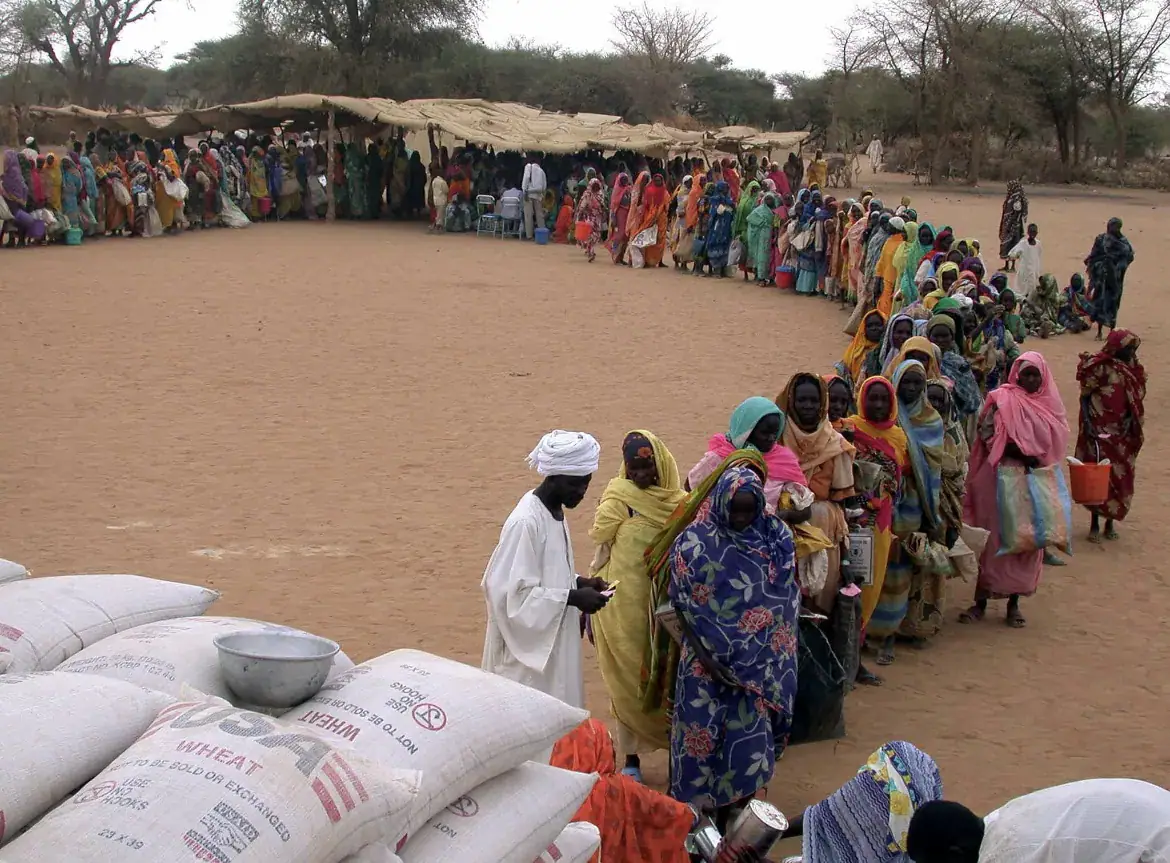
The United States, European Union, and nearly 30 countries have jointly expressed concern over the deteriorating food situation in Sudan. On October 26, 2026, they issued a statement calling on warring parties to remove obstacles to humanitarian aid to prevent famine in the coming months. The joint appeal highlights the urgent need for action to address the crisis.
According to the joint statement, approximately 19.5 million people, or 41% of Sudan's population, are facing acute food insecurity. Five million of these individuals are in a state of emergency. Without rapid intervention, over 825,000 children are at risk of severe acute malnutrition. The number of areas affected by food insecurity could double if the situation is not addressed.
The crisis in Sudan has been exacerbated by the ongoing conflict between the Sudanese army and the Rapid Support Forces (RSF) since April 2023. The fighting has led to massive population displacement, disrupted agricultural production and supply chains, and damaged essential infrastructure. The humanitarian situation is dire, with many civilians struggling to access basic necessities.
The signatories to the statement are demanding safe, rapid, and unhindered humanitarian access, particularly across front lines and borders, as well as by air to Darfur. They are also calling for the protection of civilians and humanitarian workers, increased funding, and support for upcoming agricultural campaigns. The international community is urging all parties to prioritize the well-being of civilians.
The situation in Sudan is critical, with many experts warning of an impending famine. The joint statement highlights the need for immediate action to address the crisis. The international community is working to mobilize support for humanitarian efforts in Sudan, but more needs to be done to prevent a catastrophic outcome.
Chad, a neighboring country, is likely to be affected by the crisis in Sudan. The region is already facing significant humanitarian challenges, and the situation in Sudan could have far-reaching consequences. The international community is working to address the root causes of the crisis, but a lasting solution will require a sustained commitment to peace and stability in the region.
The United Nations and other humanitarian organizations are working to respond to the crisis in Sudan, but their efforts are hindered by limited access and funding constraints. The international community must work together to support humanitarian efforts and ensure that aid reaches those who need it most.
Key points
- 19.5 million people in Sudan face acute food insecurity
- Five million people in Sudan are in a state of emergency
- Over 825,000 children in Sudan are at risk of severe acute malnutrition