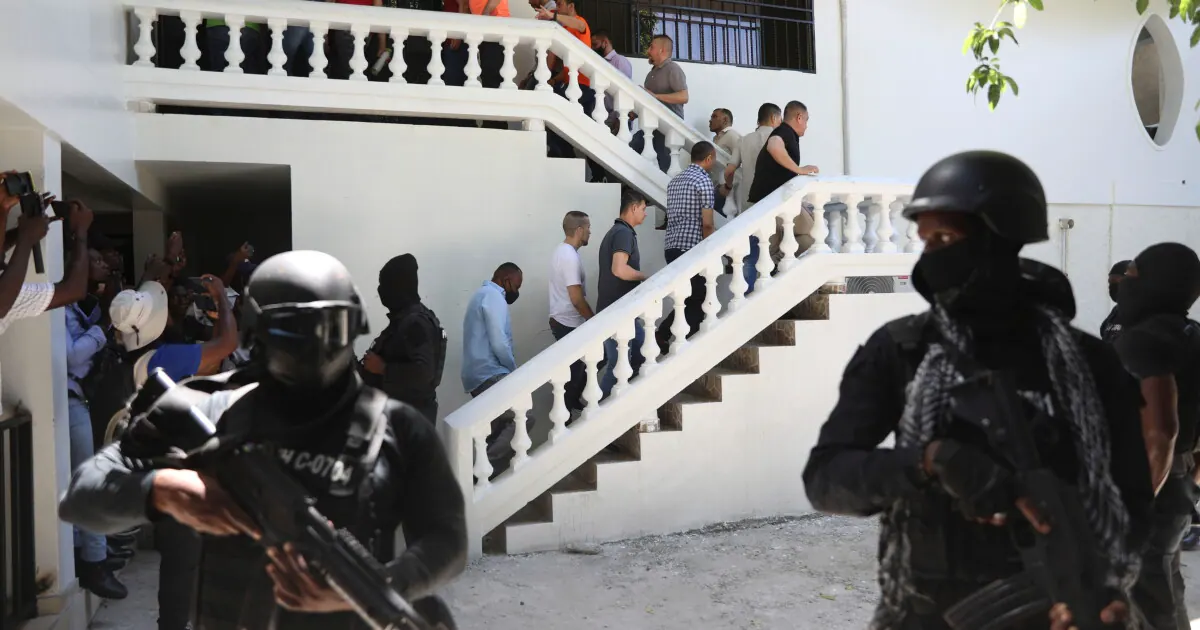
Eighteen individuals suspected of involvement in the July 2021 killing of Haitian President Jovenel Moïse are set to be extradited to the United States. This development marks the conclusion of a prolonged judicial process in Haiti for a crime that shocked the Caribbean nation. The suspects will face trial in Florida, as stated by Jason Reding Quiñones, U.S. Attorney for the Southern District of Florida. Quiñones emphasized that this extradition is a significant step in the pursuit of accountability for Moïse's assassination.
The suspects include 17 Colombian soldiers and Joseph Badio, a former employee of Haiti's Ministry of Justice. Badio, considered a key suspect, was arrested in Haiti in October 2023 after evading capture for over two years. Defense attorneys for some suspects have claimed that Badio was the mastermind behind the assassination plot. However, authorities have suggested that some suspects envisioned a coup rather than an assassination. The Colombian soldiers have testified that they were subjected to physical abuse and coerced into signing documents in a language they did not understand.
The extradition process involves 30 individuals indicted in connection with Moïse's killing, according to Quiñones. FBI Special Agent in Charge Brett Skiles noted that multiple arrests were made in the U.S. and abroad as part of this case. The FBI, along with other agencies, remains committed to ensuring that all individuals involved in the assassination are held accountable. Haiti's Ministry of Justice and Public Security stated that they surrendered the suspects to facilitate their trial.
Relatives of the suspects expressed surprise at the sudden extradition. Diana Marcela Arbeláez Llano, the wife of one of the Colombian suspects, stated that she and other family members were not expecting the U.S. to take the suspects so abruptly. She expressed concerns about the health of the detained Colombians, who have been held in inhumane conditions in Haitian prisons. Arbeláez hopes that their health will improve in the U.S., but she remains worried about their fate.
The Haitian judicial process has faced significant challenges, including gang violence, death threats, and a crumbling judicial system. In October 2025, Haitian justice officials sought assistance from the U.S. and Canada to investigate Moïse's killing. This request followed a local court of appeals order for a new investigation, the third inquiry into the assassination. Previous investigations were stalled due to the resignation of judges and gang control of the courthouse.
The U.S. continues to prosecute and sentence suspects in the case. In May, a jury in Florida convicted four men of conspiring to kill or kidnap Haiti's elected leader. At least five others have pleaded guilty and are serving life sentences. Those convicted include Arcángel Pretel Ortiz, Antonio Intriago, Walter Veintemilla, and James Solages. Another suspect, Christian Sanon, a Haitian-American citizen, is awaiting trial.
Key fugitives in the case include Dimitri Hérard, the former head of security at Haiti's National Palace, who escaped two years ago after a powerful gang federation stormed Haiti's prisons. The extradition of the 18 suspects marks a significant development in the ongoing pursuit of justice for Moïse's assassination.
Key points
- The extradited suspects will face trial in Florida for their alleged roles in the 2021 killing of Haitian President Jovenel Moïse.
- The suspects include 17 Colombian soldiers and Joseph Badio, a former Haitian Ministry of Justice employee.
- The U.S. continues to prosecute and sentence other suspects in the case, with some already convicted or pleaded guilty.