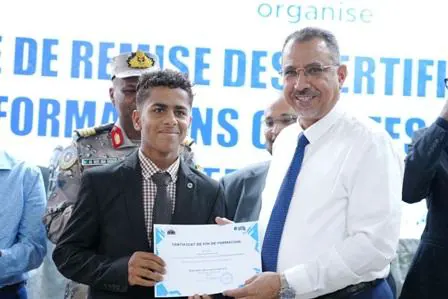
The Ministry of National Education and Vocational Training in Djibouti recently held a ceremony to award certificates to 1648 young people who completed short training courses under the Skills for Employment project. The project, funded by the World Bank, aims to develop the professional skills of young people and enhance their job prospects. The ceremony was attended by high-ranking officials, including the Secretary-General of the Ministry, Mohamed Abdullah Mahyoub, and the World Bank representative in Djibouti, Fato Fal.
The training programs, which covered various fields such as construction, transportation, hospitality, and information technology, were designed to equip young people with practical skills that meet the needs of different economic sectors. The programs also targeted vulnerable groups, including refugees and people with disabilities, to promote equal opportunities and support their integration into the economy. A total of 267 refugees and 17 young people with hearing impairments benefited from the programs.
The Skills for Employment project is part of the Ministry's efforts to develop a vocational training system that responds to the needs of the labor market. The project also aims to support the transition of young people from training to employment, entrepreneurship, or further education. The Ministry plans to continue its efforts to expand the reach of vocational training programs, with a focus on targeting the most vulnerable groups.
The ceremony was held in parallel in five internal regions of Djibouti, allowing beneficiaries to receive their certificates in their local areas. This approach aims to bring vocational training closer to young people across the country. The Ministry's efforts to decentralize vocational training programs reflect its commitment to promoting equal access to education and training opportunities.
The Skills for Employment project is a key initiative in Djibouti's efforts to address youth unemployment and promote economic growth. The project has provided young people with the skills and knowledge needed to compete in the labor market and contribute to the country's economic development. The World Bank has played a significant role in supporting the project, which is expected to have a positive impact on the lives of young people in Djibouti.
In his remarks at the ceremony, the Secretary-General of the Ministry of National Education and Vocational Training, Mohamed Abdullah Mahyoub, emphasized the importance of short-term vocational training programs in developing young people's skills and enhancing their employability. He also highlighted the need to continue efforts to expand the reach of these programs, particularly to vulnerable groups.
The successful completion of the Skills for Employment project is a significant milestone in Djibouti's efforts to promote youth development and economic growth. The project's impact is expected to be long-term, with benefits extending beyond the beneficiaries to their families and communities. Key points: 1648 young people trained, including 267 refugees and 17 with hearing impairments; training programs covered various fields, including construction, transportation, and hospitality; and the project aims to support the transition of young people to employment, entrepreneurship, or further education.
Key points
- 1648 young people trained under the Skills for Employment project in Djibouti.
- The project aims to develop professional skills and enhance job prospects for young people.
- The project targets vulnerable groups, including refugees and people with disabilities.