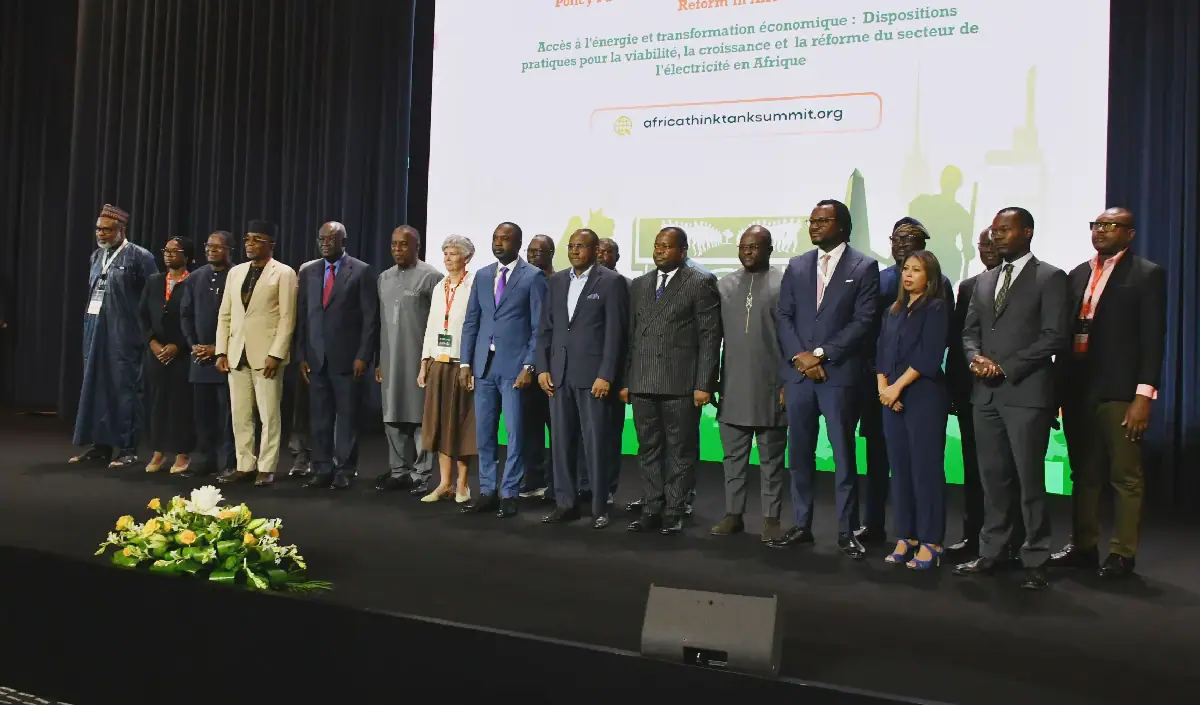
The 12th Africa Think Tank Summit, held in Cotonou, Benin, from October 28-30, brought together policymakers, researchers, and development partners to discuss the role of electricity in driving economic transformation. The summit, organized by the African Capacity Building Foundation (ACBF) and the Beninese government, with support from the African Union Commission, aimed to bridge the gap between research, policy, and investment. The event featured a ministerial roundtable, research presentations, and workshops on sector reforms.
According to the ACBF, nearly 600 million people in sub-Saharan Africa still lack access to electricity. Even connected businesses face frequent power outages and poor service quality, forcing them to rely on costly autonomous solutions. These constraints hinder their competitiveness and limit the economic impact of energy access. Benin's Minister of Economy and Finance, Aristide Mèdénou, highlighted the challenges faced by states in mobilizing resources to meet sector needs without exacerbating debt constraints.
The summit emphasized that electricity is a catalyst for economic growth only when it supports production, local processing of raw materials, and job creation. Mamadou Biteye, ACBF Executive Secretary, stressed that energy policies must be evaluated based on the activities they enable. Small enterprises, processing units, and agricultural farms require reliable and affordable energy to boost productivity and increase local value added.
The mayor of Cotonou also underscored the role of electricity in territorial development, from small workshops to industrial units. This ambition requires operators capable of financing their activities and investments sustainably. Improving governance, reducing technical and commercial losses, and strengthening regulation were identified as key levers to restore sector performance.
Babatunde Rosanwo, advisor to the African Union Commission's Vice-President, advocated for a balance between financial viability and tariff accessibility. High tariffs penalize households and small enterprises, while insufficient revenue limits operators' maintenance and investment capacities. The African Union supports the development of regional electricity markets based on adapted infrastructure, compatible regulations, and increased cooperation between states.
The summit also highlighted the importance of anticipating enterprise demand and aligning energy investments with national industrial ambitions. In Benin, these orientations align with the growing needs of industrial hubs, such as the Glo-Djigbé Industrial Zone (Gdiz). The think tanks were invited to strengthen their contribution to public policy design and evaluation, identifying relevant reforms and formulating applicable recommendations.
The summit concluded with the adoption of the Cotonou Action Agenda, which translates discussions into concrete recommendations to improve sector performance, mobilize financing, and make electricity a driver of economic transformation. The event featured an exhibition of energy innovations and research presentations within the Africa Think Tank Platform (ATTP) consortia.
Key points
- Policymakers and stakeholders emphasized the need for a coordinated approach to energy policy, involving governments, banks, and private operators.