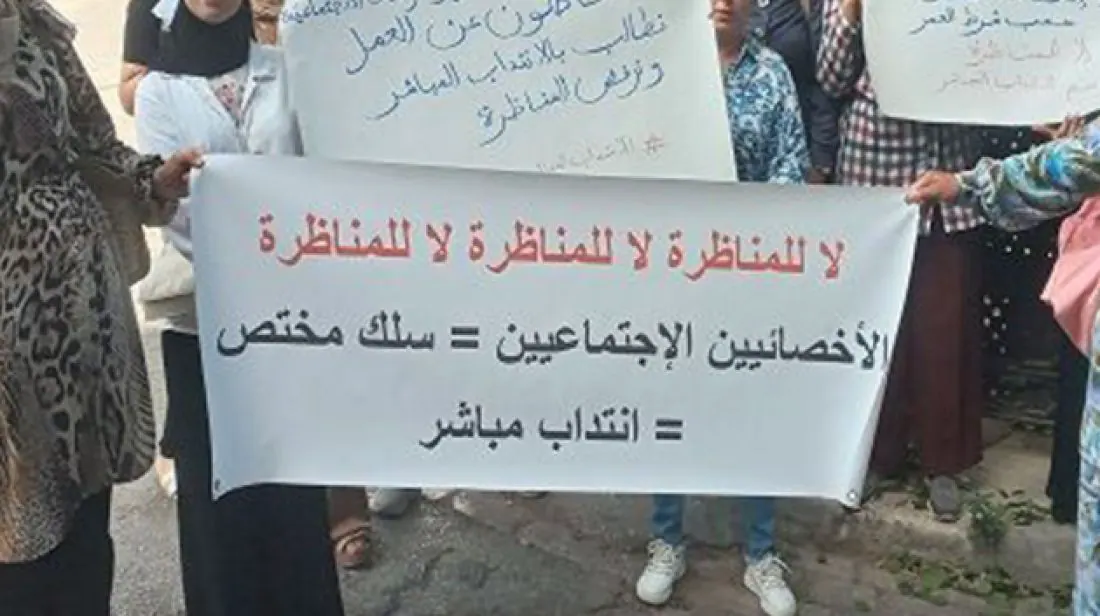
Approximately 1200 graduates from the National Institute of Employment and Social Studies in Tunisia have collectively boycotted a recruitment exam scheduled for September 13, 2026. The boycott is a protest against the choices made by the Ministry of Social Affairs. The graduates are demanding the implementation of a law that regulates the employment of social workers.
The boycott follows a series of previous peaceful protests and correspondence with various concerned parties, including the Ministry of Social Affairs, the Head of Government, and the President of the Republic. The graduates are also seeking to communicate with several deputies to push for the enforcement of the law. According to the law, direct recruitment is provided for graduates of the Institute.
The law, decree number 304 of 2013, organizes the employment of social workers and provides for direct recruitment of Institute graduates, as well as recruitment through exams. However, the graduates argue that the current exam only provides 145 positions for batches from 2007 to 2026, which they claim does not meet their legitimate expectations.
The graduates also highlighted a discrepancy between the number of available jobs and the proposed recruitment budget. They pointed out that there are over 1000 job vacancies in schools and more than 2000 in social institutions, but the Ministry's proposed budget is limited. This has led to the exclusion of nearly 200 to 300 graduates who have exceeded the legal recruitment age.
The boycott does not mean a refusal of recruitment, but rather a form of protest to demand the opening of employment opportunities through successive batches to fill all accumulated vacancies and provide fairness to all graduating batches. Some unemployed social workers staged a protest on September 10, 2026, in front of the Ministry of Social Affairs to demand direct recruitment and boycott the exam.
The protest highlights the challenges faced by social work graduates in Tunisia, who are struggling to find employment despite the need for their services. The graduates are calling for a more comprehensive and inclusive recruitment process that addresses the needs of all batches.
The situation remains unresolved, with the graduates maintaining their protest and the Ministry of Social Affairs yet to respond to their demands. The issue has sparked a wider debate about the employment of social workers in Tunisia and the need for more effective policies to address the challenges faced by graduates.
Key points
- The graduates are demanding the implementation of a law that regulates the employment of social workers.
- The boycott follows a series of previous peaceful protests and correspondence with various concerned parties.
- The graduates argue that the current exam only provides 145 positions for batches from 2007 to 2026.