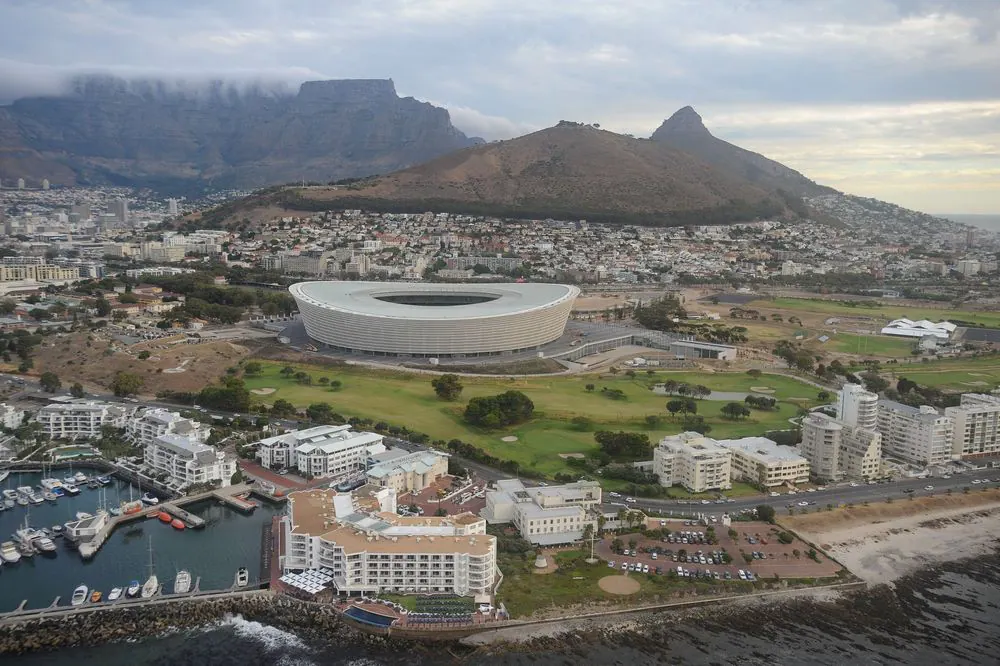
The National Media Group will host a closed-door discussion on October 13, 2024, with 11 prominent political parties in Cape Town to address key election issues. The event aims to move beyond generic campaign rhetoric and prompt political leaders to explain how their mandates will affect the administration, infrastructure, and socio-economic landscape of the City of Cape Town. The discussion will be moderated by social justice advocate and commentator Lorenzo Davids.
The participating parties include the Democratic Alliance, African National Congress, Economic Freedom Fighters, ActionSA, Patriotic Alliance, Freedom Front Plus, GOOD Party, African Christian Democratic Party, Build One South Africa, Al Jama-ah, and the National Coloured Congress. Each party will bring differing priorities to the discussion, reflecting distinct local issues across the metro. The incumbent DA will defend its record of municipal governance, independent energy procurement, and infrastructure resilience.
The ANC is focusing its municipal campaign on structural redress, arguing that Cape Town's budget must be urgently redistributed to uplift historically underfunded townships. The EFF is targeting spatial inequality and what it characterises as municipal neglect of poor and oppressed communities. The party's priorities include land expropriation without compensation for urban settlements, the total insourcing of municipal labour, and rapid upgrades in townships such as Delft and Dunoon.
Other parties have distinct priorities, including the GOOD Party's focus on releasing urban land to develop affordable housing near inner-city economic hubs. The Patriotic Alliance is prioritising strong crime-fighting measures and localised employment guarantees. The National Coloured Congress is calling for direct safety interventions and targeted economic empowerment on the Cape Flats. ActionSA is advocating strict enforcement of the rule of law and reduced bureaucratic red tape for informal traders.
The discussion will focus on five areas of municipal governance and service delivery: crime and security, housing and infrastructure, economic growth, coalition stability, and climate change and water security. Political representatives will be expected to outline practical strategies to combat gang warfare and extortion syndicates, as well as the deployment of localised law enforcement. They will also be challenged on policies to stimulate local small businesses, improve informal trading hubs, and create jobs.
The event will address plans to safeguard Cape Town against El Niño-induced droughts and worsening climate variability, with a focus on resilient infrastructure to avoid a repeat of previous water crises. The physical venue will remain closed to the public to provide a focused and secure environment for the candidates. The National Media Group and its sister publications will provide post-event coverage in print, online, and on social media.
The local government elections in Cape Town are set to take place on November 4, 2026. The discussion aims to provide a platform for political leaders to clarify their post-election coalition red lines and help prevent a collapse in service delivery. The event is expected to provide valuable insights into the parties' plans and priorities for the city.
Key points
- The discussion will focus on five key areas: crime and security, housing and infrastructure, economic growth, coalition stability, and climate change and water security.
- Eleven prominent political parties will participate in the discussion, including the DA, ANC, EFF, and others.
- The event aims to provide a platform for political leaders to explain how their mandates will affect the administration, infrastructure, and socio-economic landscape of the City of Cape Town.