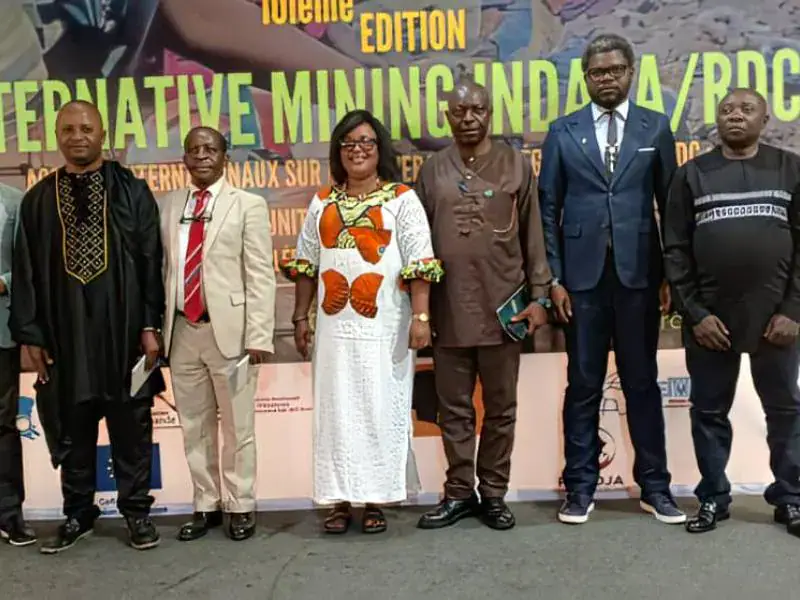
The 10th edition of the Alternative Mining Indaba (AMI) took place in Lubumbashi, Haut-Katanga province, from October 28-30. The event brought together participants from various provinces, including Haut-Katanga, Haut-Lomami, Lualaba, and Tanganyika, among others. The conference focused on "International agreements on strategic minerals in the DRC: opportunities, challenges, and perspectives."
Fabien Mayani, from the Carter Center, presented a positive assessment of the ten-year existence of the Alternative Mining Indaba platform. He views it as a significant achievement in structuring the participation of civil society and communities in the governance of the mining sector. Mayani highlighted the platform's role in creating a dialogue framework where civil society and communities can express their views.
The Alternative Mining Indaba has contributed to the revision of the Mining Code, with initial discussions in Kolwezi leading to proposals for amendments that influenced the reform. Mayani noted the unique involvement of public authorities alongside citizen organizations in the DRC's AMI. The participation of national and provincial mining ministry representatives, as well as local and provincial authorities, fosters a confrontation of viewpoints and better understanding of sector challenges.
The conference addressed the central theme of mining agreements, which represent opportunities for the sector's development and value creation but also pose risks for public finances and communities if not well negotiated or implemented. The Carter Center facilitated a session on the impact of these agreements on public revenue mobilization, highlighting risks of revenue loss for the Congolese state.
Specific agreements, such as SICOMINES and the partnership with the United States, have raised concerns. The SICOMINES agreement includes fiscal exemptions and exemptions that limit the DRC's ability to capture mining revenue. The agreement with the US also contains clauses that may introduce fiscal exemptions, potentially affecting the DRC's revenue mobilization.
To address these concerns, Fabien Mayani advocated for harmonizing tax regimes applicable to different mining agreements. This would subject companies to common rules, enabling the state to effectively control their activities. Mayani also emphasized the need to prioritize local transformation of strategic minerals over mere exportation, creating value added within the national territory.
Looking ahead, Mayani called for the platform's maintenance and strengthening, with potential improvements to its organization. Future editions may expand to other provinces, increasing direct participation from communities affected by mining activities. After ten years, the Alternative Mining Indaba aims to consolidate its role as a consultation framework between communities, civil society, and public authorities.
Key points
- The 10th Alternative Mining Indaba called for harmonized tax regimes for mining agreements to boost public revenue and ensure better redistribution of mining benefits.