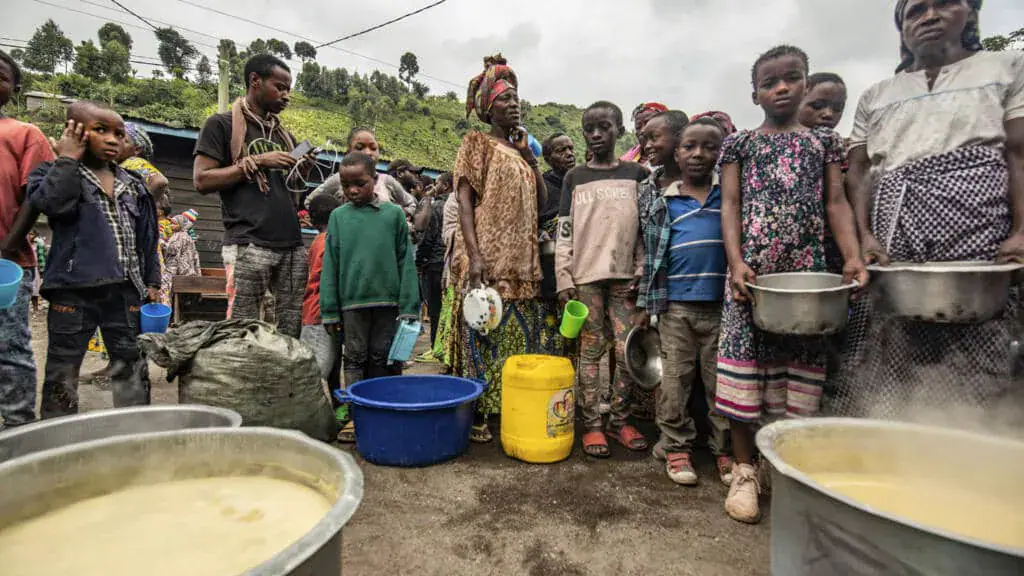
The situation in Luiza, a territory in the Kasai Central region of the Democratic Republic of Congo, shows a positive trend in food security. According to the 25th cycle of the Integrated Food Security Classification (IPC) framework, presented in Kinshasa by the World Food Programme (WFP) and the Food and Agriculture Organization (FAO), only 10% of Luiza's population is experiencing acute food insecurity. This development is particularly encouraging compared to previous years.
The findings of the IPC framework indicate that Luiza has moved from phase 3, which is a crisis, to phase 2, which is a stress phase. The coordinator of humanitarian affairs for the United Nations, Mr. Akpadji, stated that the results are contrary to previous reports in 2021 and 2025, which showed that 55% and 15% of the population were experiencing food insecurity, respectively. These results demonstrate progress in addressing food insecurity in the region.
Mr. Akpadji emphasized that the priority is to consolidate the progress made and accelerate collective efforts in areas where food insecurity remains a concern. He also clarified the concept of food insecurity, which goes beyond just a lack of food and includes factors such as armed conflicts, forced displacement, and the impact of diseases like Ebola and cholera. These factors can fragilize households' means of existence and exacerbate their vulnerability to food and nutritional insecurity.
The IPC framework is an essential tool for analyzing food insecurity, monitoring its evolution, and guiding decisions and investments towards areas and populations that need them most. The analysis was made possible through collaboration between the government of the DRC, specialized agencies of the United Nations system, including the WFP and FAO, and members of the IPC technical group. This synergy enables better targeting and coordination of interventions.
According to Mr. Akpadji, collective efforts and convergence of humanitarian, development, and peace actions are necessary to address the root causes and structural factors of food insecurity. This includes the involvement of international financial institutions to scale up responses and provide sustainable solutions to displacement. The goal is to support households and communities in building resilience and improving their food security.
The situation in Luiza contrasts with the broader context in the DRC, where 28.8 million people face acute food insecurity. In other regions, such as Lubumbashi, the Catholic Church is experiencing challenging times, while in the South Kivu province, households vulnerable to food insecurity have welcomed assistance from the WFP. These developments highlight the varying degrees of food insecurity across the country.
The DRC government, along with its partners, continues to work towards addressing food insecurity and promoting sustainable development. By prioritizing the most vulnerable populations and areas, the government and its partners aim to make a positive impact on the lives of millions of people affected by food insecurity. The progress made in Luiza serves as an example of the positive change that can be achieved through collaborative efforts.
Key points
- Only 10% of Luiza's population faces acute food insecurity
- The territory has moved from phase 3 to phase 2 in terms of food security
- Collective efforts are necessary to address the root causes of food insecurity