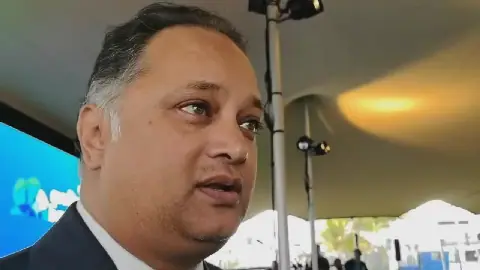
APC National Chairman Nentawe Yilwatda stated that over 10 million Nigerians who benefited from the Federal Government's ₦75,000 conditional cash transfer program do not have phones or access to social media. According to Yilwatda, these individuals are poor and vulnerable Nigerians targeted by the program. He made this statement on September 26, 2026, during an APC National Executive Council retreat in Maiduguri, Borno State, as the party prepares for the 2027 general election.
Yilwatda's claim has significant implications for the 2027 election, as it highlights a large group of Nigerians who may be largely absent from digital conversations shaping the election. Nigeria's digital divide is substantial, with an estimated 130 million people offline at the end of 2025. This raises concerns about the effectiveness of social media as a platform for political engagement and debate.
According to DataReportal, Nigeria had 165 million cellular mobile connections at the end of 2025, equivalent to 69.2% of the population. However, the country had only about 109 million internet users, leaving a significant portion of the population without internet access. Furthermore, there were 47.8 million social media user identities, equivalent to about 20% of the population.
The digital divide in Nigeria has significant implications for political communication and engagement. A candidate can trend on social media platforms like X, Facebook, TikTok, or Instagram without necessarily reaching the Nigerians who are most affected by policies such as food prices, fuel costs, wages, or cash transfers. This means that social media reactions cannot be treated as a definitive measure of public opinion.
The issue is not limited to the 10 million people who benefited from the ₦75,000 cash transfer program. If millions of voters have limited access to phones, internet, or social media, political parties and election officials cannot rely solely on digital platforms to reach them. This highlights the need for a more comprehensive approach to political communication and engagement.
The APC has stated that it is prepared for the 2027 election and will continue to communicate the work of President Bola Ahmed Tinubu's administration to Nigerians. However, Yilwatda's claim serves as a reminder that the party and other political stakeholders must consider the needs and perspectives of all Nigerians, including those who are not active on social media.
The digital divide in Nigeria is a broader issue that requires attention from policymakers, politicians, and other stakeholders. With Nigeria's population projected to be over 240 million, it is essential to address the infrastructure gaps that limit access to digital technologies and ensure that all Nigerians can participate in the political conversation.
Key points
- APC chairman Nentawe Yilwatda claims 10 million Nigerians who received ₦75,000 cash transfer have no phones or social media access.
- Nigeria's digital divide has significant implications for the 2027 election and political communication.
- The issue highlights the need for a comprehensive approach to political communication and engagement that considers the needs of all Nigerians.