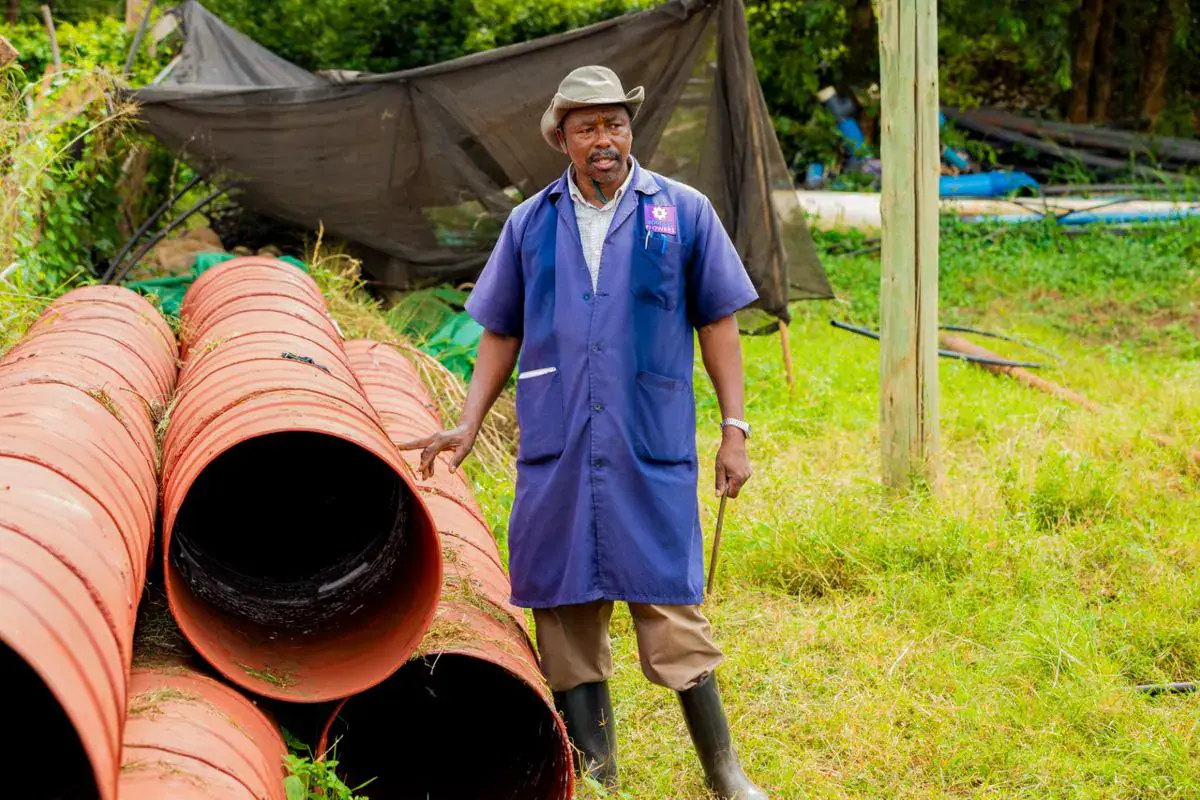
African Plantations Kilimanjaro (APK) has invested $1.2 million in upgrading its irrigation system at the 450-hectare Lambo Estate in Machame, Kilimanjaro. The farm replaced its traditional open-furrow irrigation system with a piped network that uses gravity to transport water from the Weruweru River. This change has improved water delivery efficiency and reduced reliance on diesel-powered pumps. The upgrade was part of APK's efforts to balance agricultural production with conservation of shared water resources.
The irrigation upgrade has significantly reduced greenhouse gas emissions. According to a report by the Natural Resources Stewardship Programme II (NatuReS II), the changes have reduced irrigation-related greenhouse gas emissions by approximately 75 percent. The farm avoids approximately 12.8 tonnes of carbon dioxide equivalent emissions per hectare annually, translating into about 5,760 tonnes across its 450 hectares. This reduction in emissions is a notable achievement, especially for communities and smallholder farmers who depend on the Weruweru River for agriculture, household consumption, and other livelihood activities.
The investment was undertaken through APK's participation in the Sustainable Water Management Partnership for the Weruweru sub-catchment (SUWAMA Weruweru). This partnership brings together businesses, public institutions, schools, civil society organisations, and other stakeholders to address competing demands on water resources. The partnership includes 14 participating institutions and stakeholders, among them the Pangani Basin Water Board, APK, and Dekker Chrysanten. It provides a platform for discussions on water planning, governance, agricultural requirements, domestic consumption, and environmental protection.
APK Project Manager Gabriel Kagume said the decision to upgrade the irrigation system was driven by the need to maintain commercial production while improving water and energy efficiency and strengthening resilience to climate change. The partnership has also supported community-led environmental restoration. One beneficiary is Violeth Rabson, a 49-year-old farmer from Machame, who has planted and maintained approximately 2,100 trees along the Weruweru River to help restore riverbanks and protect the water source.
The Green Recovery: Launching the Pay to Grow Model project, implemented by Kijani Pamoja through SUWAMA Weruweru with support from GIZ NatuReS II, links financial incentives to tree survival. Participants receive payments based on the number of trees that remain alive. Under the performance-based arrangement, Ms Rabson receives Sh400 for every surviving tree every three months. The additional income has enabled her to invest in farming, purchase livestock, and support her son's education.
Jacob Mallya, chairman of the Weruweru River and a local resident, said improved water conveyance had helped build confidence among users, particularly during dry periods when demand for the resource increases. When a lot of water was lost before reaching the farms, users could feel the pressure, especially during the dry season. Today, when water is conveyed more efficiently, there is greater confidence that the resource can be shared more fairly.
The NatuReS II programme, funded by Germany's Federal Ministry for Economic Cooperation and Development and implemented by the German development agency GIZ, supported partnerships in the Weruweru area of Kilimanjaro and Usa River in Arusha. The programme ran in Tanzania from September 2023 to October 2026, addressing shared environmental challenges, including water scarcity, pollution, competing demands for water, and catchment degradation.
Key points
- The irrigation upgrade has reduced irrigation-related greenhouse gas emissions by approximately 75 percent.
- The farm avoids approximately 12.8 tonnes of carbon dioxide equivalent emissions per hectare annually.
- The investment has improved water delivery efficiency and reduced reliance on diesel-powered pumps.